Private AI WorkspaceHow-to guide
When the knowledge assistant finds two versions of the answer
A knowledge assistant can retrieve two convincing answers because the organization really has two versions of a procedure. The engineering task is to preserve their identity and authority, then help the reader understand which applies. We can build version-aware retrieval and comparison around your document lifecycle, with unresolved authority sent to the person who owns the procedure.
Define what makes a version authoritative
File modification time, approval time and effective date answer different questions. A recently uploaded copy may contain an obsolete instruction, while a future revision is approved but not yet applicable. Agree which metadata determines use for the business question. Where that information is missing, make the gap visible rather than inferring authority from a filename.
Consider a procedure approved today but effective next month. An operational question about tomorrow should not automatically use it, while a planning question may need it. Record the intended time of the user's question when it matters. The retrieval policy can then distinguish current instructions, future changes and historical evidence. Asking for clarification is appropriate when the question lacks the date or product context needed to choose an applicable version.
Keep document families connected
Give related revisions a common document identity while retaining a separate identifier for each version. Record scope such as product family, location and project. Search can then bring together relevant revisions without treating copies as independent evidence. The comparison interface should show what changed and why the current question may need one version rather than another.
Create relationships for supersedes, derived from and applies to where the source system provides them. Avoid assuming that files with similar names are revisions of the same procedure. A copied document may be a local adaptation rather than a replacement. The indexing pipeline should preserve that distinction and show missing relationships for review. This is especially useful after migrations, when upload dates change but the business history of the documents does not.
Preserve contradictions instead of smoothing them
If two authorized sources prescribe different tolerances, the assistant should show both values with their context. A fluent blended answer can be more misleading than an explicit unresolved result. We define who decides whether a procedure was superseded, whether a local exception applies or whether the documents themselves need correction before the assistant can answer.
A conflict record should preserve the competing values, source versions and unresolved scope. For example, different inspection intervals may apply to different equipment models rather than represent a mistake. The assistant can expose that possibility without choosing it as fact. Ask the procedure owner to resolve the applicable rule and record the decision. A later answer can then use the approved relationship rather than rediscovering the same contradiction every time someone asks.
Make history accessible to the right audience
Historical documents can remain valuable for audits and past experiments without belonging in every operational answer. Separate access to the history from the default choice of current instructions. Archived revisions may also contain personal or commercial information no longer needed by general users. Retention and retrieval rules should therefore be reviewed together.
Archived material can be searchable for a limited research audience while excluded from routine operational answers. Make the mode visible so readers understand why an old document appeared. Review stored briefs when a source is withdrawn, especially if the withdrawal reflects an error rather than ordinary replacement. A notice on the derived brief can preserve history while warning its reader that an important supporting instruction has changed since it was prepared.
Evaluate changes across the document lifecycle
Test a new revision, a withdrawn procedure, a future effective date and a duplicate uploaded elsewhere. Ask both current-operation questions and questions about an earlier experiment. Measure use of the applicable version and successful escalation of unresolved conflicts. Track how quickly an approved update becomes visible without erasing the evidence behind older briefs.
Build an evaluation timeline containing the same question before and after a document's effective date. Add a withdrawn revision, an unrelated file with a similar name and a local exception. Check both the selected answer and its explanation of applicability. Measure unresolved conflicts that were correctly escalated separately from questions that could have been answered. This prevents the team from optimizing only for confident responses or only for cautious refusals.
- Record approval and effective dates separately from upload time when choosing the version relevant to a question.
- Distinguish a local adaptation from a replacement before treating similar filenames as members of one revision chain.
- Keep competing values and their scope visible until the procedure owner approves an applicability decision.
- Test the same question before and after an effective date, including withdrawn sources and stored derived briefs.
Start with one difficult document family
Bring a procedure with several revisions, examples of real ambiguity and the owner who approves changes. We can scope metadata cleanup, version relationships, retrieval behavior and a comparison screen together. The implementation quote should distinguish missing governance decisions from software work, because code cannot decide which conflicting instruction the organization intends to follow.
We can begin with one procedure family whose lifecycle the business owner understands. The delivery can include a metadata register, version relationships, retrieval rules and a comparison interface. If authority decisions are missing, list them as work for the document owner rather than disguising them as an AI feature. The operating handover should explain how approval, withdrawal and effective-date changes reach the assistant and how the team checks that they did.
Inside the product
Private AI Workspace
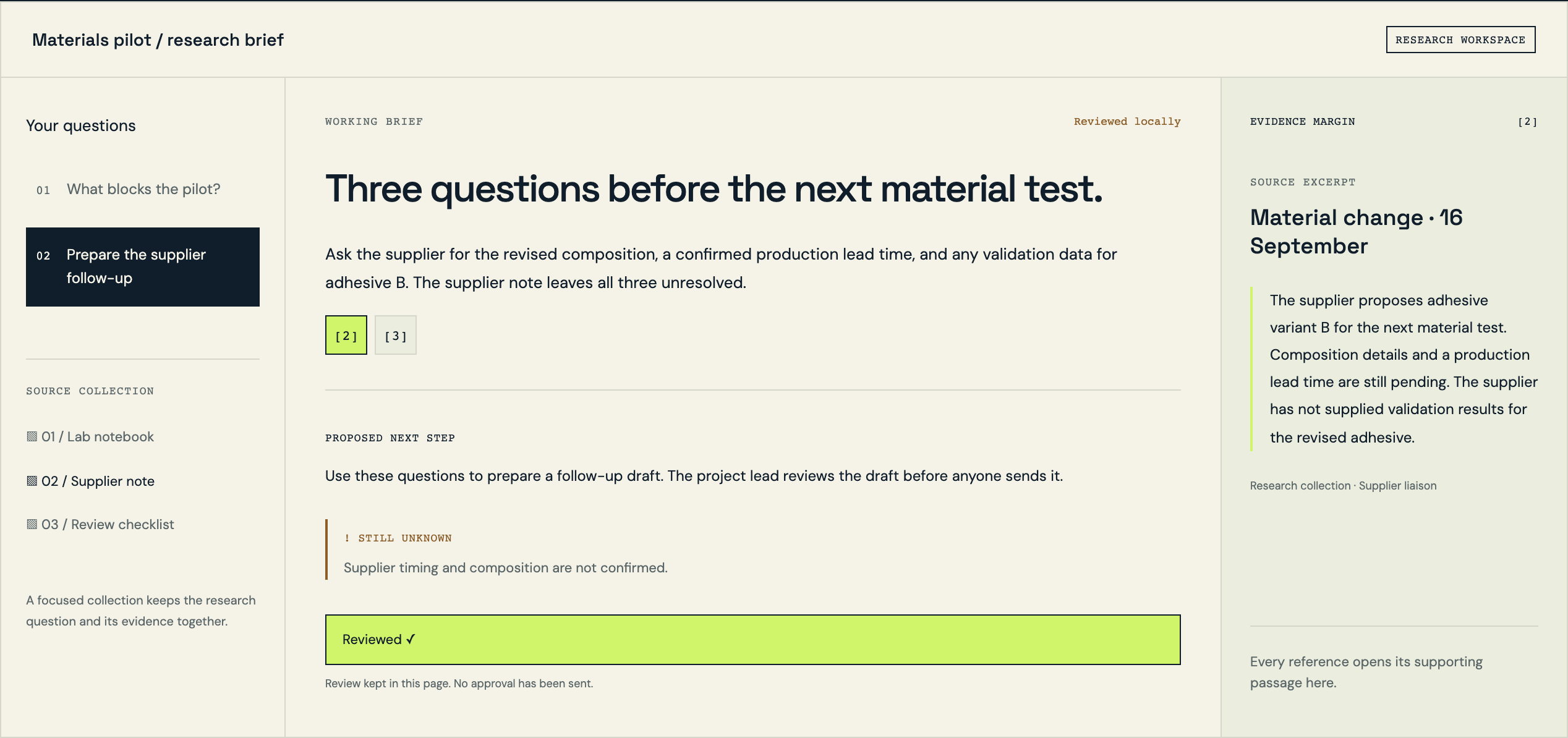
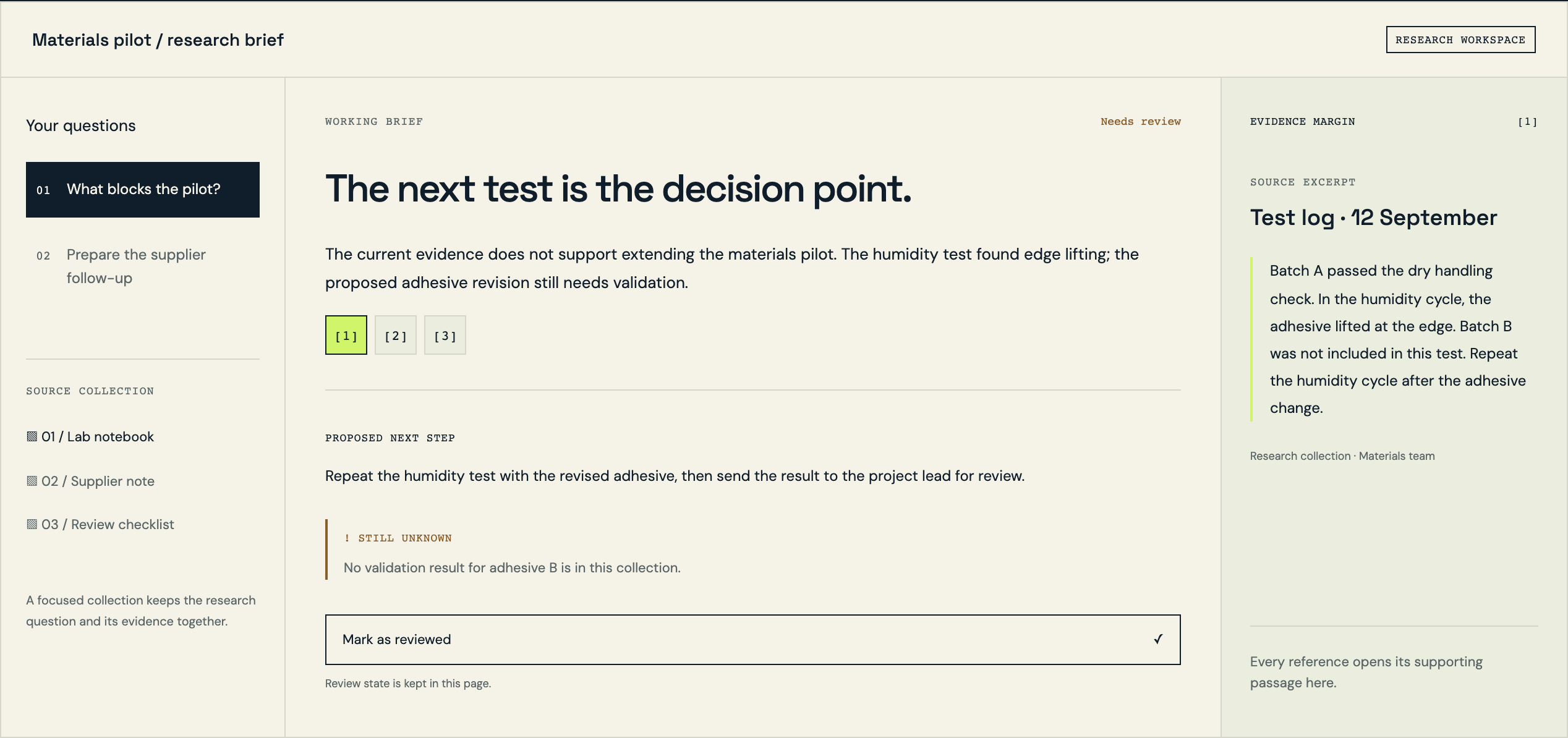
Follow the references
Sources & inspiration
ConsentDocs
Devpost project by ILoveBuns Ren
Evidence-linked document review.
This independently created project is credited as inspiration. The workflow and implementation guidance in this article are RDC’s analysis.
Put the guide to work
Start with your workflow.
Tell us what your team needs to do, which systems are involved and where the current process slows down.