Private AI WorkspaceWorkflow
Make document permissions follow the AI search
An internal search assistant should answer from the documents the current person is entitled to use. Protecting the source folder is only part of that behavior: passages, summaries, cached answers and exports can all carry the same information elsewhere. We design permission-aware search as a complete path from document ingestion to the moment a user opens the supporting evidence.
Start from identities people already use
List the identity provider, project groups and document repositories before inventing another set of AI roles. Determine how a person's current membership is resolved and which source is authoritative. Some repositories use inherited folder access; others give access to individual documents. The connector must preserve that distinction when preparing searchable records.
Prepare examples of direct document access, inherited folder access and group-based access from the intended repository. Check how guests and temporary project members are represented. The search connector must know whether a permission applies to the whole file or only a source-specific scope. Resolve conflicting membership information before allowing ingestion to create a broader audience. An identity mapping error can affect every retrieved passage even when the search engine itself behaves correctly.
Carry access metadata through retrieval
A searchable chunk needs a stable relationship to its source and applicable permissions. Authorization should constrain which passages reach answer generation, not merely hide a link afterwards. We also check source opening: the person should see the supporting original under the same identity, with understandable behavior if the document has moved or access has changed.
Use the same authorized identity to test retrieval and opening the original. A user may receive a filtered search result but encounter a source link belonging to another account, or the reverse. Inspect both outcomes. Summaries should be generated only from permitted passages, and shared caches must not reuse an answer across users with different rights. Cache keys and conversation memory therefore belong in the access design, not only in performance tuning.
Treat revocation as an active event
An employee moving to another project is a useful test of the whole design. Their previous results, cached excerpts and exported material may have different lifecycles. Define how quickly an access change reaches the search index and what happens during that delay. When permission state cannot be established, sensitive content should wait for an authorized resolution.
Define an acceptable revocation delay and how the connector detects permission changes. Polling and event-based updates create different failure paths. If a change notification is lost, periodic reconciliation may still be needed. Test the moment before and after a group removal, including an already open conversation. The interface should explain that a source is no longer accessible without revealing its restricted contents or substituting an unrelated answer merely to keep the conversation moving.
Include administrators and support access
Service accounts often see more than ordinary users, and diagnostic tools can expose retrieved text. Review these paths separately from the chat interface. For a Romanian or EU organization, document who can inspect content, under which support procedure and for how long it is retained. An administrator's convenience should not silently expand every team's search boundary.
Inspect search analytics for titles, snippets and query text that may themselves reveal a confidential project. A support dashboard can accidentally become a wider search interface than the product. Restrict diagnostic access and decide which information is masked by default. Where investigation requires content, record the purpose and limit its duration. Administrative roles should be tested with the same care as employee roles, because their reach can span repositories and projects.
Test both allowed and forbidden answers
Create a permission matrix with named test identities and expected documents. Ask the same question as two people with different access, then change a membership and repeat it. Include documents containing nearly identical public and restricted passages. Evaluate useful answers for authorized users as well as information leakage; a system that denies everything is not a usable success.
Build negative tests around plausible information requests rather than only direct document names. A user might ask for a restricted value indirectly, through a comparison or a summary of project changes. Include those cases with nearly identical allowed material. Record which source supplied each part of an answer. A useful report separates blocked disclosure attempts from legitimate questions the system unnecessarily refused, so access protection and practical search coverage improve together.
- Test inherited, direct and group permissions using representative identities from the repository that will be connected.
- Verify generated excerpts and shared caches as well as links, since protected originals alone do not protect derived answers.
- Exercise membership removal during an open conversation and measure the agreed delay before retrieval rights change.
- Check support dashboards and analytics for titles or snippets that could expose information outside normal search permissions.
Scope access integration before expanding sources
The first delivery can connect one repository and identity system with explicit tests for ingestion, retrieval, revocation and source opening. Bring group rules, repository owners and the support process. We can then estimate additional connectors based on their permission models instead of assuming every new folder behaves like the first.
We can deliver the repository connector, permission mapping, retrieval checks and a revocation test record as one bounded project. Ask the repository owner to provide representative groups and unusual access cases. The implementation estimate should name unsupported permission structures and the chosen handling for them. Expansion to another repository then starts with its actual authorization semantics, rather than copying an integration that only appears similar at the folder level.
Inside the product
Private AI Workspace
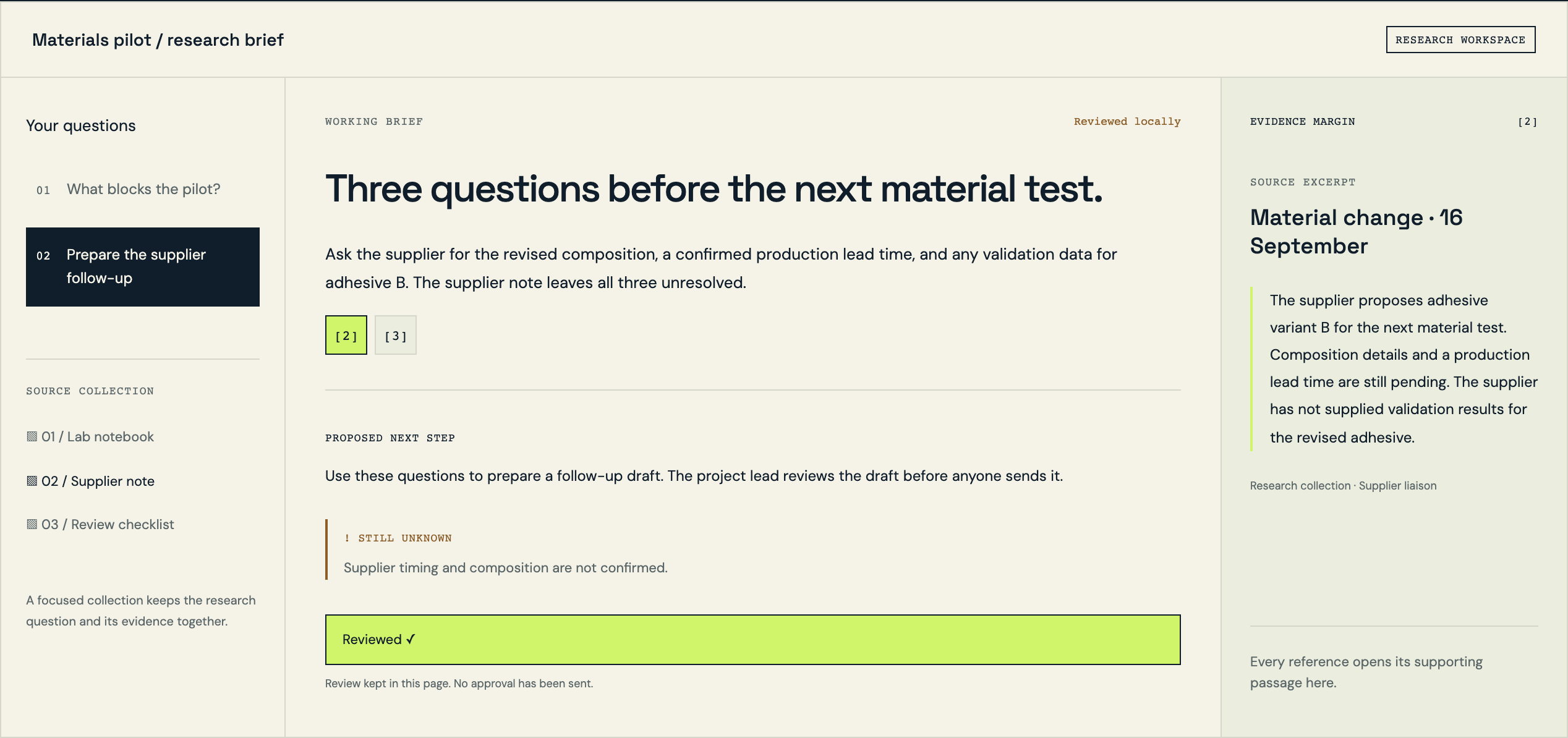
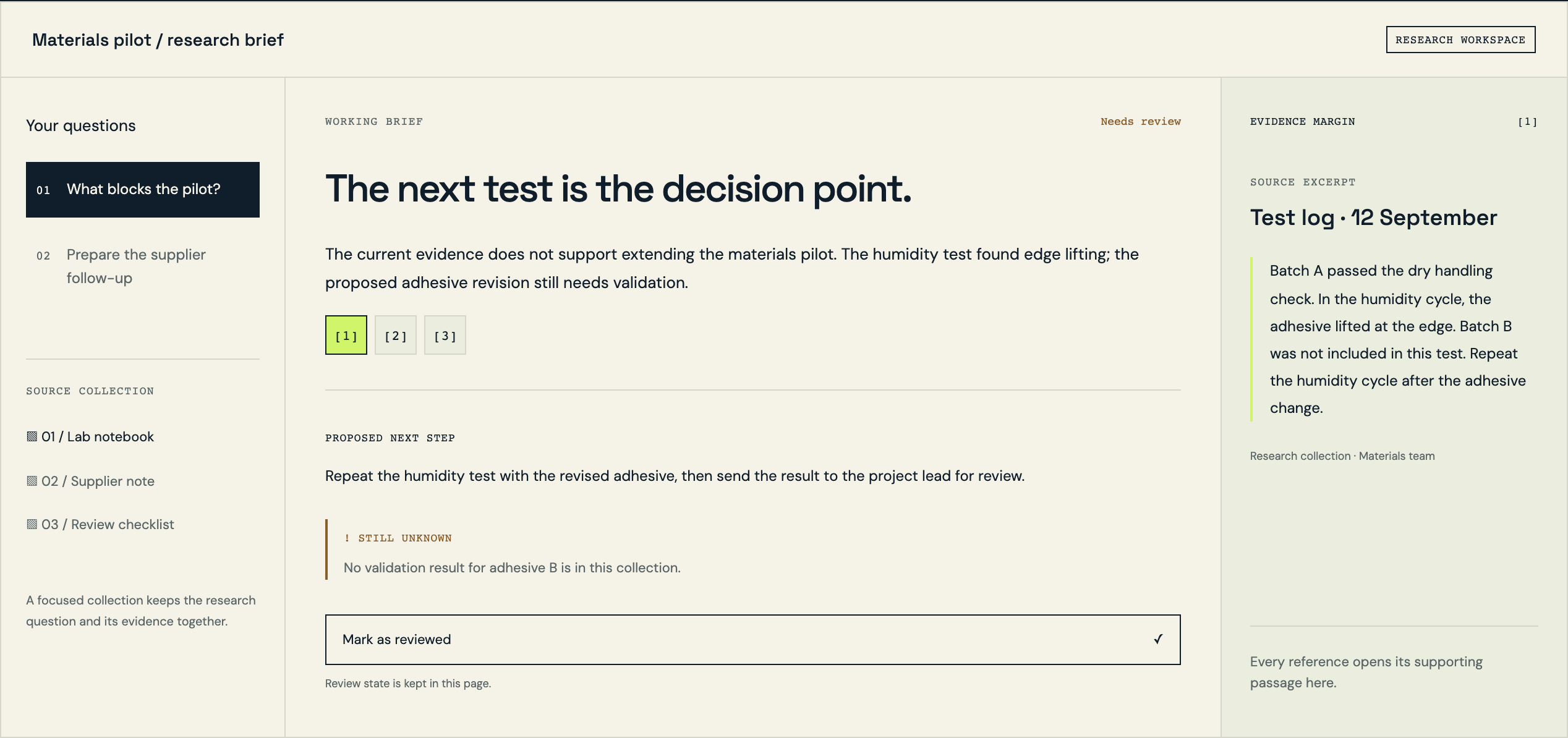
Follow the references
Sources & inspiration
AI Powered Auto CRM
Devpost project by Alejandro Capellán
Business knowledge shapes lead conversations.
This independently created project is credited as inspiration. The workflow and implementation guidance in this article are RDC’s analysis.
Put the guide to work
Start with your workflow.
Tell us what your team needs to do, which systems are involved and where the current process slows down.