Private AI WorkspaceDecision guide
Choose where a private AI workspace should run
A private AI workspace needs a clear operating model: where documents are stored, where questions are processed and who keeps the service working. We compare local infrastructure, agreed EU hosting and approved external services against the actual workload. The useful decision is a deployment your team can run and explain, with known data boundaries and a realistic support plan.
Classify the material before selecting hardware
Separate public specifications, internal procedures, customer records and restricted project material. Each category may need different handling. We ask which documents may be indexed, whether extracts may reach a model provider and who may inspect support logs. That inventory can reveal that one workspace needs several processing routes rather than a single deployment rule.
A useful classification exercise follows one document through its full lifecycle. A supplier specification may be usable by engineering but contain an appendix restricted to purchasing. An employee record may belong outside the first workspace entirely. Record the reason for each boundary and the person who can approve an exception. This gives deployment choices a concrete basis and avoids treating every internal file as if it had identical handling requirements.
Size the service around concurrent work
Document search, long-report summarization and scanned-page extraction place different demands on memory and processing. Test the intended task with the number of people likely to use it together. Include indexing jobs running in the background. Hardware that handles one short question comfortably may create an unacceptable queue when a team arrives after a meeting.
Benchmark complete requests rather than isolated model throughput. Retrieval, document parsing, model loading and generation all contribute to waiting time. Test a cold start, a long document and several concurrent users while ingestion runs. Record hardware configuration and model version so comparisons can be repeated. Capacity decisions should include headroom for updates and background work, not only the fastest successful response from a single user during development.
Plan failure without changing the data promise
If local processing fails, the system should not quietly send restricted documents to a cloud model. Define which fallback routes are approved and which tasks must wait. A visible paused state can be preferable to an undocumented change in processing location. Recovery planning should also cover restored indexes, model versions and the credentials required to resume work.
Consider a failed disk or an unavailable inference service. The recovery plan should identify whether documents, indexes and model files can be restored independently. Rebuilding an index may take longer than restarting the interface, so show the workspace's actual readiness. Test that a fallback cannot bypass the approved processing boundary. If only some workloads may use an external provider, enforce that distinction through configuration and access rather than relying on user memory.
Map responsibility across the service
EU hosting does not by itself settle access, retention or processor responsibilities. Map the organization, hosting operator, model provider and support team to what each can see and do. Include backups, diagnostics and administrative accounts. The resulting record should help your privacy and security owners assess the implementation without having to infer its behavior from a sales diagram.
Draw separate lines for content, identity and operational telemetry. A locally processed question could still appear in a remotely hosted error tracker if logging is careless. Review backup destinations and any remote administrative access alongside the main inference path. The hosting decision should identify the controller and relevant processors with the organization's reviewers, while the operating design specifies who can give access and inspect the workspace when troubleshooting requires confidential material.
Compare operating cost and usable response
Measure waiting time, throughput and answer quality on the same checked workload for each candidate. Add the time needed to apply updates, investigate errors and restore service. A smaller model can be suitable for a narrow extraction task while a different route serves longer reasoning. Keep the recommendation tied to measured tasks rather than the largest advertised model.
Compare costs over an agreed workload and operating period. Include hardware amortization where relevant, hosting, electricity, provider charges and staff time for maintenance. Do not pretend these are known before measuring the intended use. Record the quality tradeoff as well: a cheap configuration that sends most requests to manual review may be the wrong fit. Present a recommendation by workload, with the evidence that would change it if demand grows.
- Map content, identity, telemetry and backup destinations separately before describing a deployment as local or private.
- Benchmark cold starts and concurrent requests while document ingestion is running on the intended configuration.
- Define approved fallback routes and verify that an outage cannot silently move restricted content to another provider.
- Include model updates, index restoration and administrative ownership in the cost and operating comparison.
Request a workload-based deployment proposal
Bring document categories, representative workloads, expected users and the person who will own operations. We can propose an evaluation followed by deployment, access integration and an operating handover. Identify hardware purchase, hosting and ongoing support separately so the initial build cost does not hide the effort of running the workspace.
A practical quote can separate a readiness assessment from implementation. The assessment produces a workload inventory and measured comparison; implementation installs the selected stack, connects identity and documents, and prepares monitoring and recovery instructions. Hardware purchasing can remain a separate decision. Agree who applies operating-system and model updates and how a changed model is evaluated before replacing the version that users currently rely on.
Inside the product
Private AI Workspace
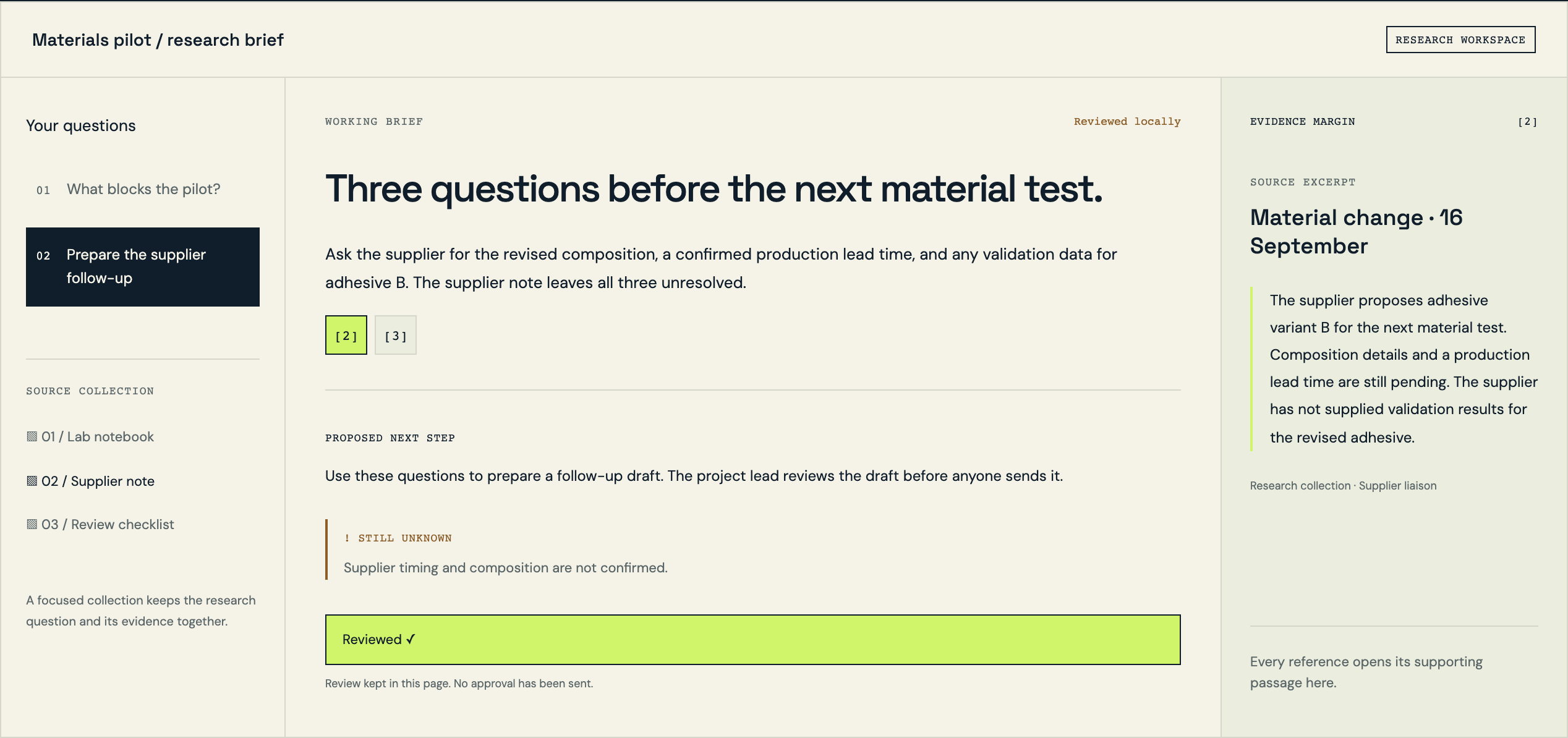
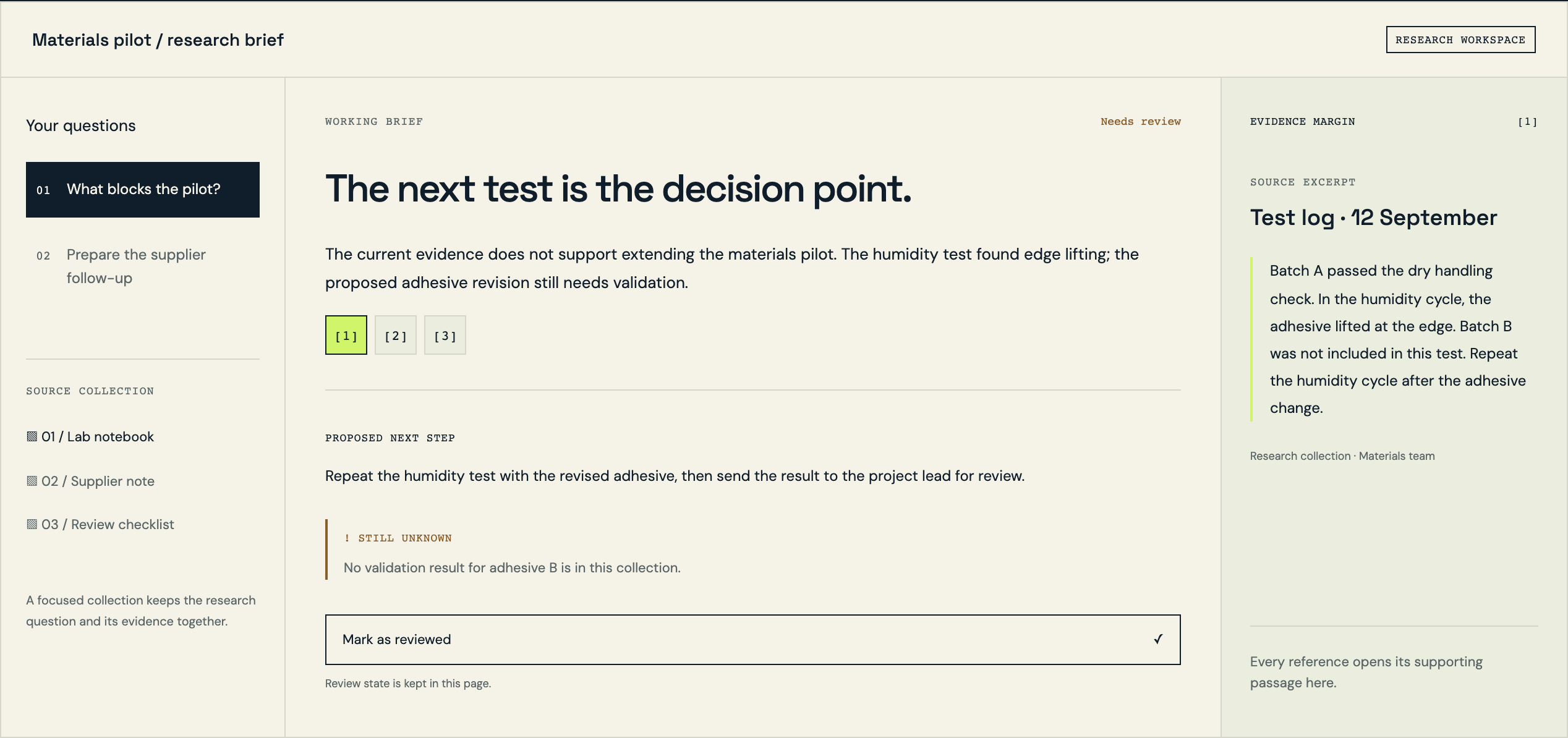
Follow the references
Sources & inspiration
PrivyDocs
Devpost project by EduOS Office
Local document processing.
This independently created project is credited as inspiration. The workflow and implementation guidance in this article are RDC’s analysis.
Put the guide to work
Start with your workflow.
Tell us what your team needs to do, which systems are involved and where the current process slows down.