e-TransportHow-to guide
Keep vehicle changes visible in the transport declaration workflow
Dispatch can replace a vehicle after reporting preparation has begun. If that change stays in a phone call, the delivery team and the declaration operator may work from different facts. A controlled handoff makes the change visible and records who must determine the next action.
Treat a vehicle change as a shared event
The workflow should begin when dispatch records the new vehicle information, not when somebody notices a discrepancy later. Link the change to the delivery and any associated preparation or declaration reference. Preserve the previous value so the reviewer can understand what changed.
Capture enough context to decide
Record the requesting person, time, reason, old vehicle details and proposed replacement. Identify the affected shipment and current process stage. A change before preparation may need only source-data updating; a change after an official operation requires review through the supported procedure.
Use current ANAF guidance and the authorized specialist to determine the appropriate handling. The software should not infer a legal correction route from the fact that a field looks editable. Its job is to supply the context and carry out the approved supported operation.
Notify the right people once
Dispatch, the declaration operator and the person coordinating the delivery may all need different information. Give each a clear task or acknowledgment rather than a copied group message. Show whether the new vehicle is proposed, reviewed or reflected in the relevant record.
Prevent duplicate requests when two colleagues report the same replacement. A stable change identifier helps connect messages, decisions and outcomes. If another vehicle change arrives before the first is resolved, display the sequence and require review against the latest delivery state.
Keep operational and official outcomes separate
Updating the ERP vehicle field does not establish that any required official change has completed. Track the local update and the supported official operation independently. Attach the resulting response to the approved change.
If the official interface is unavailable or the outcome is uncertain, preserve that state and assign an owner. Repeating an operation without first checking its outcome can make the history harder to understand. Define the investigation and escalation route with the people responsible for transport reporting.
Limit access to the change task
A dispatcher may need vehicle and delivery information without access to all commercial values. An authorized reporting operator may need a wider view. Apply these distinctions to the task screen and its attachments.
Keep credentials outside the change request and avoid placing complete declaration payloads in chat. Record who approved the change and which company context was used. Temporary operational access should end when the person's assignment changes, while the decision history remains available to the appropriate team.
Test changes in the awkward order
Rehearse a replacement while preparation is open, another replacement after approval and two competing updates from different operators. Include a delayed response so local and official views temporarily differ.
Measure unresolved changes, time from dispatch update to reviewer acknowledgment and changes applied to the wrong preparation version. Ask an uninvolved colleague to reconstruct the final vehicle history. The test succeeds when each event and decision is explainable, not simply when the latest screen shows the newest number.
Define who acknowledges each vehicle change
A notification is useful only when its recipient understands the required response. Dispatch can confirm the operational replacement, while the authorized specialist confirms the reporting treatment. These acknowledgments should not be represented by the same checkbox.
Keep a concise event timeline that shows request, review, approved action and outcome. The timeline helps when a replacement is withdrawn or another vehicle is assigned before the earlier request is resolved. The cases below turn those situations into explicit interface and handoff requirements.
| Situation | Evidence to inspect | Decision or next action |
|---|---|---|
| The replacement is only proposed | Dispatch has recorded new vehicle details, but the operational coordinator has not confirmed that this assignment will be used. | Keep proposal and confirmed assignment distinct so the reporting operator does not act on a vehicle that is still being negotiated. |
| Preparation was already approved | The previous vehicle appears in the reviewed preparation snapshot and the new request identifies the affected delivery. | Reopen the relevant review with both values visible and let the authorized specialist determine the supported subsequent operation. |
| Another replacement arrives | Two change requests concern the same shipment, with different times and potentially conflicting vehicle details. | Show their sequence and resolve the current intended assignment before applying an older request that has become stale. |
| The request is withdrawn | The requester records that the proposed replacement is no longer needed, while downstream work may already have started. | Notify the current owner and assess the existing actions; do not erase the request or assume withdrawal reverses an official operation. |
| An official outcome is uncertain | The approved action has a request reference but no confirmed result in the local evidence record. | Investigate using the supported route, preserve uncertainty and avoid automatic repetition until the responsible operator establishes the next step. |
| The next shift takes over | Open requests show their owners, current stage, last evidence and unresolved questions at the time of handover. | Assign a successor explicitly and confirm that they can access the necessary records without relying on the previous operator's account. |
Build the change handoff around dispatch
RDC can build delivery-linked change requests, role-specific tasks and response evidence for the operations your authorized specialists approve. We start with your dispatch process and supported official interfaces.
Bring redacted examples of vehicle changes and explain who currently contacts whom. The scope can define source ownership, permitted actions, recovery and acceptance checks. This makes last-minute operational changes easier to coordinate without promising that a generic edit is valid for every reporting situation.
Inside the product
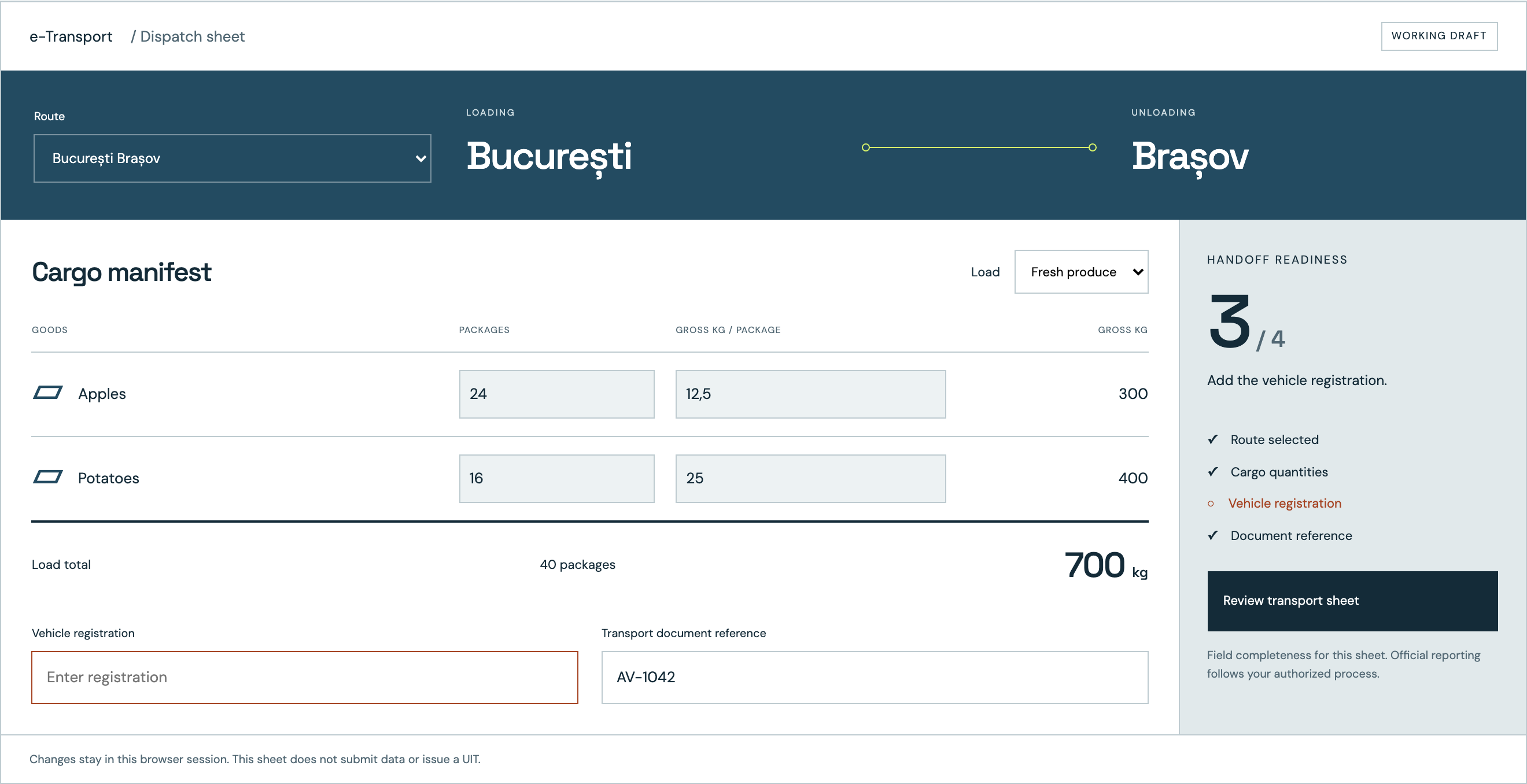
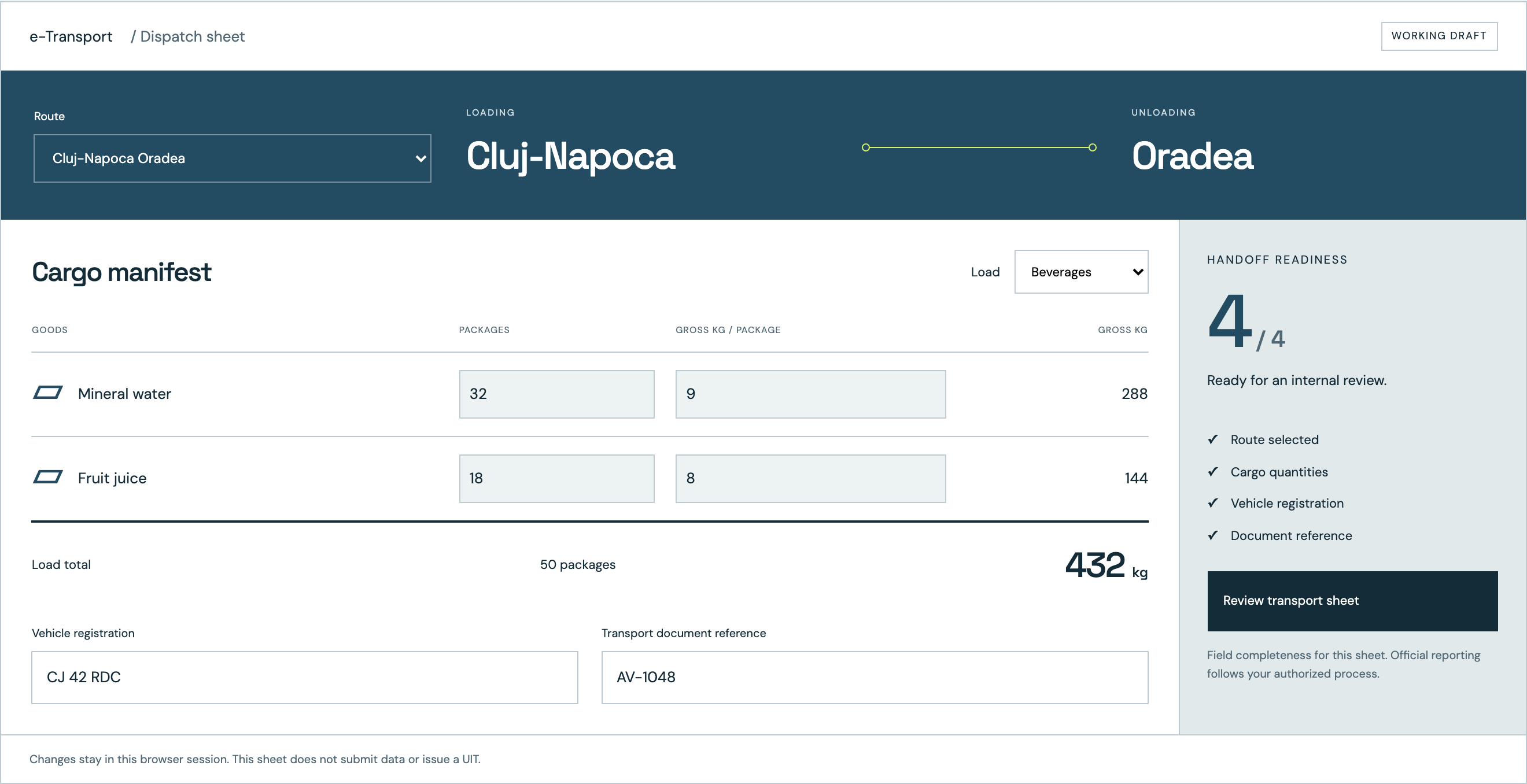
e-Transport
Follow the references
Sources & inspiration
AntWMS
Devpost project by Mohammad Rafaquat Alam
Warehouse operations with structured tracking.
This independently created project is credited as inspiration. The workflow and implementation guidance in this article are RDC’s analysis.
Put the guide to work
Start with your workflow.
Tell us what your team needs to do, which systems are involved and where the current process slows down.