e-TransportWorkflow
Link the UIT record, delivery and official response
A UIT reference stored in a chat thread is hard to connect reliably to the delivery people are preparing. A delivery-centered workspace keeps the reference, relevant official response and operational owner together, so dispatch can inspect the evidence behind the current status.
Put the transport reference beside the delivery
Start by defining the relationship between your shipment records and the reporting cases confirmed by the authorized specialist. Avoid assuming that one sales order always corresponds to one declaration or transport reference. Operational splits and changes need explicit relationships.
Build a record that survives handovers
Use a stable delivery identifier and attach preparation, submission and response records to it. Preserve the company context and the version of the delivery data used. A new person taking over the shift should see what has happened without asking the previous operator to forward messages.
Display the reference as data from a specific response, not as a free-text badge detached from its source. Where users enter a reference manually, record that origin and require the agreed verification. Imported and manually confirmed information should remain distinguishable in history.
Show the evidence needed for the next action
Dispatch needs a concise view: delivery identity, responsible person, unresolved issues and the evidence relevant to the agreed next step. The reporting specialist may need the complete prepared values and official response. Design these views around their decisions.
Use current ANAF guidance to confirm the applicable operational and reporting requirements. The workspace can organize evidence, but it should not invent an all-purpose readiness rule. A specialist-approved checklist for the actual transport scenario is a stronger basis for deciding when the process may continue.
Preserve changes without losing the earlier record
If quantities, route information or vehicle data change, retain the previously used values and connect the new review to them. Show which response belongs to which version. A current delivery screen must not make an older response appear to describe newly edited data.
Give cancelled or superseded preparation records a clear state. Keep the authorized specialist's decision about further action attached to the case. The operational team then sees both the latest situation and why an earlier reference is no longer the one being used.
Keep external sharing narrow
Drivers, dispatchers, commercial staff and external specialists need different information. Share the material required for their role through an agreed channel. A full internal shipment file may contain prices or customer details unnecessary for a particular handoff.
Apply permissions to response downloads and exports as well as the main screen. Record who supplied or confirmed a reference. Technical logs should preserve identifiers and outcomes without exposing credentials. Agree how access is removed for temporary staff and transport partners.
Reconcile delivery records with response records
Test a delivery with no response yet, a manually supplied reference, a changed vehicle and a split operational shipment. Ask whether every displayed status can be traced to an identifiable piece of evidence and a responsible person.
Measure deliveries awaiting specialist review, responses not linked to an internal record and references copied without verification. Review the time it takes to reconstruct a case during a shift handover. The goal is a clear evidence chain, including unresolved work, rather than a dashboard where every delivery appears ready.
Specify what each reference proves
A workspace can contain several identifiers that look similar but refer to different things: internal delivery, preparation record, official attempt and transport reference. Label each by purpose and keep the relationship explicit. This prevents staff from copying a technical identifier where a business reference is required.
Use the following evidence checks during discovery. Where a required relationship is not supported by the available source, agree a controlled manual confirmation rather than inventing an automatic link. The goal is a record dispatch can interpret reliably during a busy handover.
| Situation | Evidence to inspect | Decision or next action |
|---|---|---|
| An internal delivery number is shown | The identifier resolves to the operational shipment and its source system, independently of any official reporting reference. | Use it to join internal work, while labeling official identifiers separately and retaining the exact relationships confirmed by the specialist. |
| A reference was entered manually | The record identifies the person, source document and time of entry, with the agreed verification still visible. | Require the designated check before treating the reference as confirmed evidence for the delivery's next operational step. |
| The official response is attached | The stored response links to a specific attempt and the approved preparation version that generated it. | Display that relationship so later delivery edits cannot make the response appear to cover newly changed information automatically. |
| One order creates several shipments | The order links to distinct operational deliveries, each with its own preparation state and evidence requirements. | Review the reporting relationships for those shipments rather than copying a single reference across the entire order history. |
| A driver receives an exported document | The export records delivery identity, relevant reference, version and the intended scope of information shared. | Provide only the material needed for that handoff and define how a later approved update reaches the recipient. |
| A previous preparation is superseded | The history retains its identifiers and response while another approved version represents the current intended operation. | Make the current choice clear without deleting earlier evidence needed to explain how the transport record changed. |
Scope a transport evidence workspace
RDC can build delivery-linked records, response retrieval or import, role-specific views and an exception queue around your supported process. We define the mapping with dispatch and the authorized reporting specialist.
Bring redacted delivery records and the documents people currently pass between teams. The proposal can identify integrations, manual confirmation points, access and acceptance tests. That gives the team a dependable place to follow transport evidence while keeping the interpretation of official requirements with the responsible specialists.
Inside the product
e-Transport
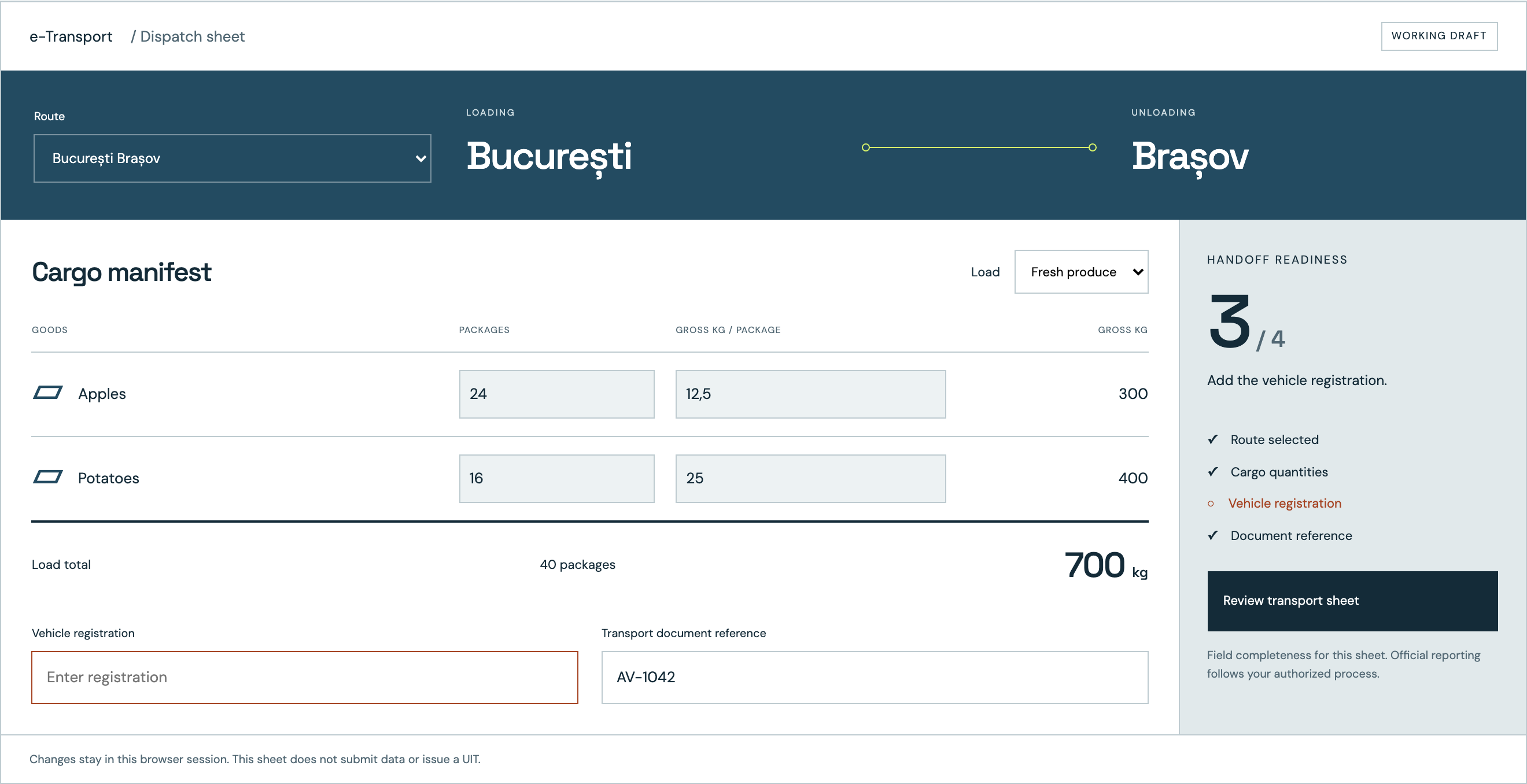
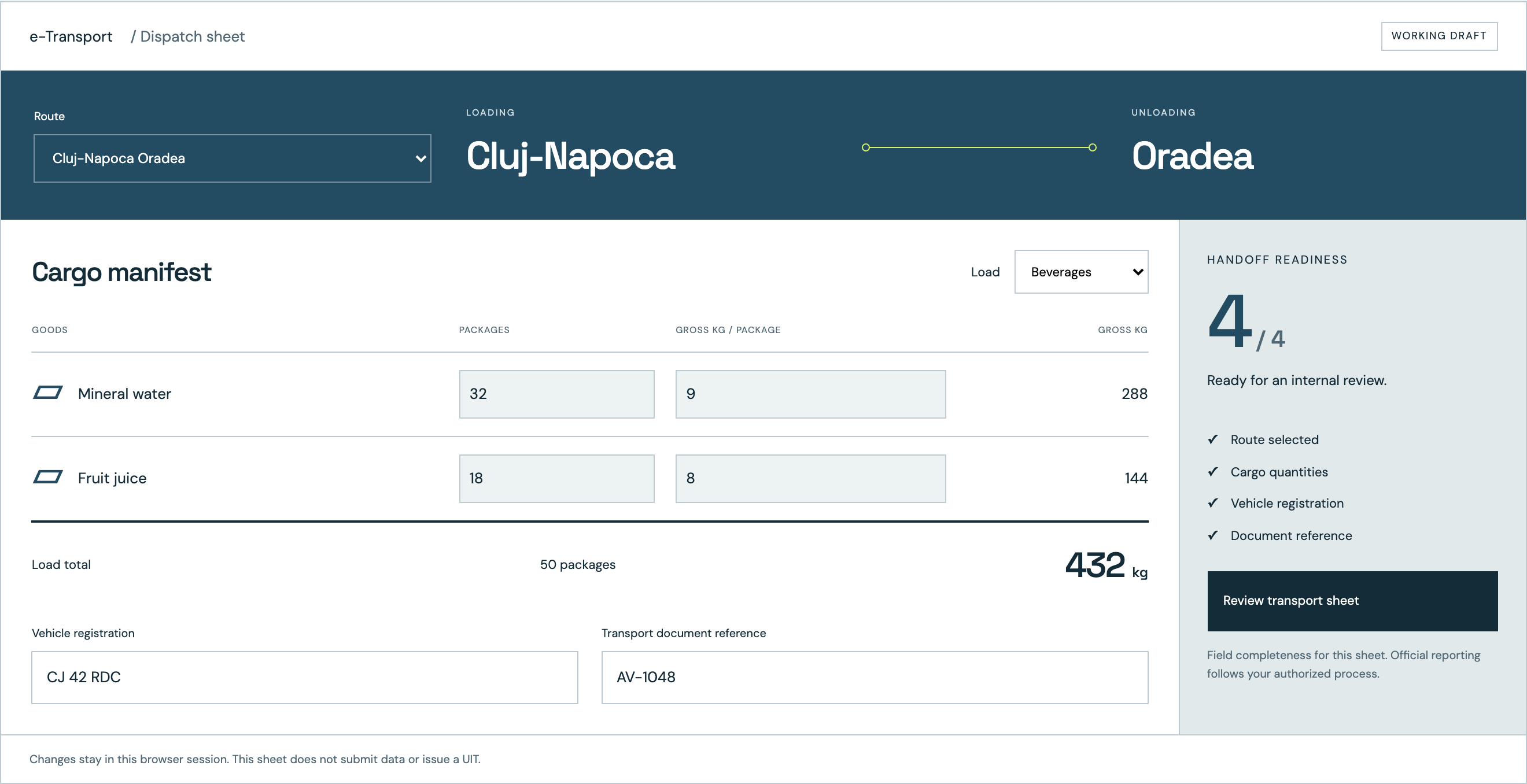
Follow the references
Sources & inspiration
LogiHub
Devpost project by ASHOK KUMAR PATUR
Connected logistics information and workflows.
This independently created project is credited as inspiration. The workflow and implementation guidance in this article are RDC’s analysis.
Put the guide to work
Start with your workflow.
Tell us what your team needs to do, which systems are involved and where the current process slows down.