AntiVisionHow-to guide
Show progress in a daily-challenge app without making missed days a dead end
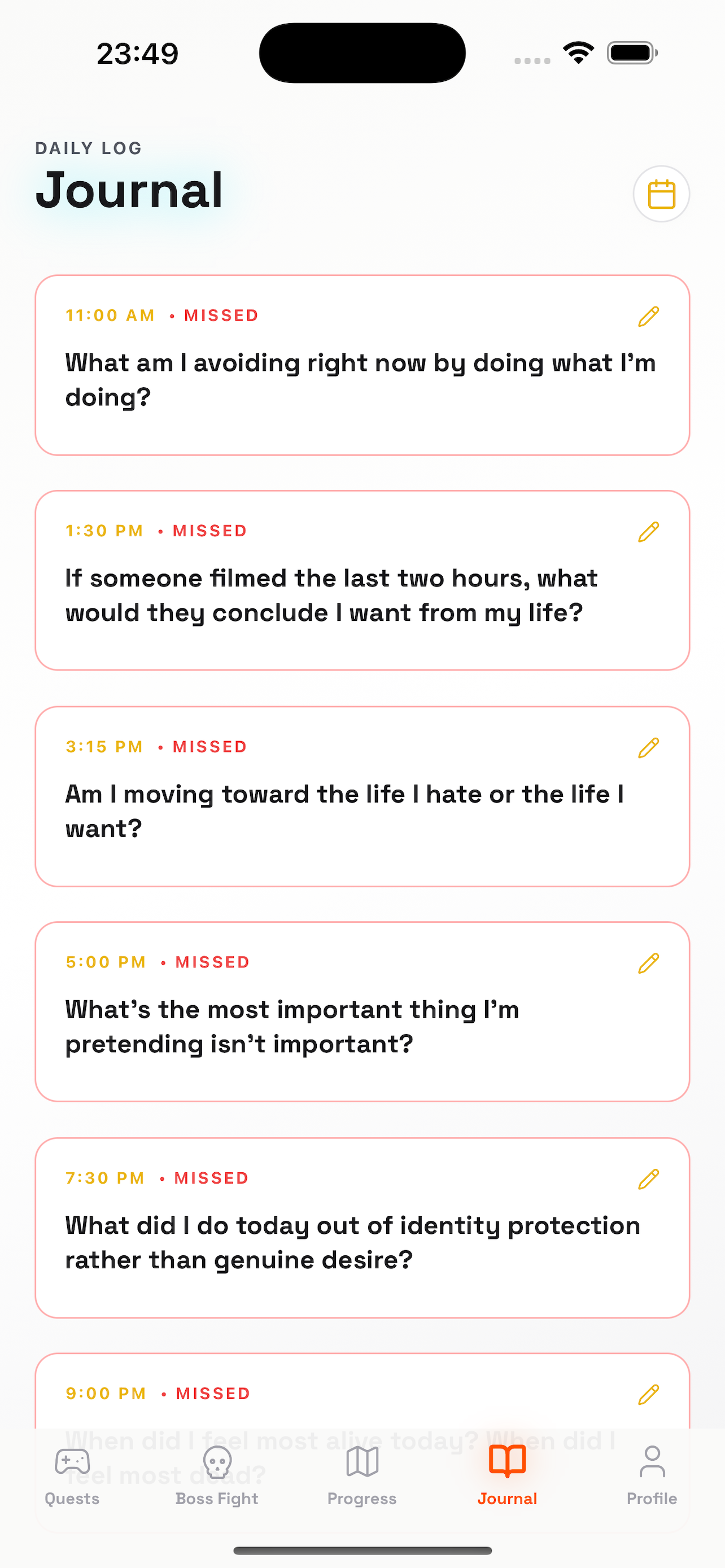
A person returning after a gap should be able to see what still counts and what they can do next. AntiVision's daily challenges and progress provide an owned product context for this recurring mobile interaction. For a new app, we define completion, missed days, restarts and reminders explicitly so the interface offers a clear way back without inventing progress or treating absence as a dead end.
Define what the progress indicator represents
A completed action, a consecutive-day count and progress toward a larger goal describe different things. Choose which matters to the product and label it clearly. Do not let a visually prominent streak erase the value of earlier completed work. The data model should preserve the events needed to explain the number the interface displays.
Write definitions for each visible measure before drawing the progress screen. A total of completed actions should have an explainable event history; a consecutive-day indicator needs an explicit day boundary. If an action is edited or undone, decide which numbers change. Keep different measures visually distinct so the user does not interpret a missed streak as loss of all progress. The design should make its arithmetic understandable without turning the interface into a technical report.
Give the returning user a manageable next step
Show the relevant current action and allow a deliberate restart or adjustment where the product supports it. A person should not need to clear a backlog of stale challenges before doing something useful today. Explain what happens to earlier history when a goal changes. The proposed design should make resuming understandable without claiming a guaranteed habit-building effect.
Create a return state for a short gap and another for a longer absence if they require different context. The person may need to review the goal rather than immediately resume the old challenge. Offer a clear continuation and a way to adjust the plan. Avoid presenting every missed day as an outstanding debt. The application should preserve useful history while allowing a fresh next action that matches the person's current circumstances.
Decide how dates and edits affect completion
Midnight boundaries, travel across timezones and late edits can change a daily count unexpectedly. Agree whether completion belongs to a local day, a scheduled interval or another defined period. Preserve the original event when correcting a mistake. These choices should be reflected in the interface rather than hidden in a calculation users cannot understand.
Store the event time and the rule used to assign it to a day. A timezone change should not accidentally count one action twice or move it unpredictably between days. Decide how late completion and manual correction behave, and test daylight-saving transitions where relevant. If users work across devices, synchronize the event identity as well as its status. A duplicate completion request should not inflate progress merely because it arrived from another device.
Make reminders adjustable and discreet
A reminder should respect the user's chosen timing and interruption preferences. Decide what appears on a locked screen and whether a missed action changes later notifications. Review the data collected to measure engagement so it remains proportionate to the product question. Returning less often is not automatically a problem that justifies more personal tracking.
Separate reminders for a planned action from messages about a missed one. Let people control frequency and timing without losing access to the feature. Check lock-screen wording for personal goal details and avoid escalating notification pressure automatically without an explicit product decision. Engagement measurement can use bounded events such as opening the return screen or completing an action, while keeping free-text goals and journal contents outside routine analytics.
Test explanations as well as counters
Use a gap in activity, a timezone change, duplicate completion and a corrected entry. Ask users why the displayed progress changed and what they would do next. Measure successful resumption and mistaken interpretation separately from raw engagement. The aim is a truthful, usable experience; any claim about long-term retention needs observed product evidence.
Prepare a table with event time, applicable day, prior count and expected result. Include a gap, a corrected completion, a timezone change and repeated synchronization. Ask users to explain the screen after each case. A technically correct count can still mislead if the label suggests another meaning. Measure successful return to a useful action and confusion about preserved history; longer-term retention should be assessed only from actual product observations over an appropriate period.
- Define completed actions, consecutive days and goal progress separately before choosing the main visual indicator.
- Provide a useful return action without treating every missed challenge as an obligation that blocks today's work.
- Test event identity and applicable-day rules through timezone changes, edits and repeated synchronization across devices.
- Check reminder preferences and preserved history when a user resumes after a gap or changes the goal.
Scope the recurring interaction as a complete feature
Bring the challenge structure, definition of completion and the audience's likely routines. We can build the progress model, return screen, reminder controls and lifecycle tests together. The quote should include date behavior and editing decisions rather than treating them as edge cases after development. AntiVision is the owned example; your product sets the actual rules.
We can scope progress rules, event storage, the returning-user screen and reminder controls together. Bring the challenge model and the meaning of completion for your audience. The quote should include date and synchronization tests plus content for missed-day states. Agree how future challenge types will affect existing history. This lets the recurring experience grow without rewriting past accomplishments or leaving users unsure whether their earlier work still belongs to the goal.
Inside the product
AntiVision
Follow the references
Sources & inspiration
Dream Actions
Devpost project by Rasheeda Robinson
Goals become daily actions.
This independently created project is credited as inspiration. The workflow and implementation guidance in this article are RDC’s analysis.
Put the guide to work
Start with your workflow.
Tell us what your team needs to do, which systems are involved and where the current process slows down.