AntiVisionDecision guide
Turn a broad goal into a clear first action in a mobile app
A goal app earns its first useful moment when a person can see a manageable action connected to something they care about. AntiVision's goals and daily challenges give us an owned product context for that design problem. For a new application, we scope progressive setup, an editable goal and a clear next step before asking users to describe their entire future.
Choose the first useful decision
An opening questionnaire should collect only what changes the first experience. A broad goal can be narrowed through one question and an editable suggestion rather than a long assessment. Let people understand why a piece of information is requested. If they can complete a meaningful first action before account setup or detailed preferences, evaluate that path during discovery.
Separate the information needed to suggest a first action from information that is merely useful later. A person's preferred reminder time may be unnecessary before they understand the challenge format. Detailed history may be inappropriate for an initial trial. Test a shorter path that asks for one goal and lets the person edit the proposed next step. The product can request more context when that context clearly changes a decision the user is ready to make.
Connect the goal to a concrete next action
The user should be able to explain what to do next and how it relates to the goal. Avoid a suggestion so broad that it simply restates the aspiration. Support changing the action when it does not fit the person's circumstances. The application can provide structure without assuming that every user has the same time, resources or daily schedule.
Define an action in terms the person can recognize as completed. 'Improve my routine' is a direction; a concrete activity with an adjustable size gives the interface something usable to present. Avoid assuming a fixed amount of free time. Let people choose a smaller version or another action that serves the same goal. The relationship between goal and task should remain visible so personalization does not become a stream of unrelated suggestions.
Let people revise an imperfect start
A user may choose a goal too quickly, skip a question or leave before finishing setup. Preserve the useful part and show how to continue or edit it. Changing direction should not require deleting the account. Decide whether an unfinished setup produces reminders and make that behavior understandable, so onboarding does not become an unwanted obligation.
Treat skipped setup as a saved state, not a broken account. The person may understand the product better after one useful action and return to complete preferences later. If they revise the goal, explain whether earlier actions remain in history or move to another category. A change should not silently rewrite the meaning of completed work. Test returning from a notification before setup is finished so the app lands at a valid next step.
Collect personal ambition with care
Even an ordinary goal can reveal sensitive information when combined with notes or daily activity. Decide what the product needs to store and what can stay optional. Review analytics events so they do not carry free-text goals unnecessarily. For an EU audience, align the explanation of data use with the actual account, storage and support design.
Free-text ambitions can reveal health, relationships, finances or work concerns. Do not assume a field is low sensitivity because its label says goal. Collect only the detail necessary for the feature and keep it out of routine event analytics. If personalization uses an external service, map the content it receives separately from account data. Explain optional inputs as optional and avoid making a person disclose more personal context just to reach the first useful screen.
Measure understanding before optimizing completion
Ask people to describe their chosen action after onboarding and observe whether they can change it. Count unfinished steps with context: a skip may be a deliberate choice rather than a failure. Measure successful first actions and support questions without claiming that interface completion proves lasting behavior change. The product's purpose should shape how success is interpreted.
Observe people who understand the app's purpose but have different levels of certainty about their goals. Ask each to describe the next action and how to revise it. Measure confusion between goal creation and task completion. Review where people deliberately skip rather than treating every exit as failure. A founder can use these observations to simplify onboarding without making unsupported claims about motivation, adherence or long-term personal improvement.
- Ask only for information that changes the first useful experience and explain why each requested field matters.
- Make the next action concrete, adjustable and visibly connected to the user's chosen goal.
- Preserve partial setup and explain how changing a goal affects earlier actions and saved history.
- Evaluate whether users understand and can revise the next step, separately from long-term outcome claims.
Scope a focused onboarding experience
Bring the audience, the first useful action and the decisions the app genuinely needs before offering it. We can design and build onboarding, goal editing and the first challenge together. AntiVision supplies product experience, while the new app's audience and purpose determine the actual flow. Include usability checks and content decisions in the implementation quote.
We can scope a focused onboarding prototype, goal editor and first-action flow before a large library of challenges. Bring examples of the intended audience and the kinds of action the product should support. Include content ownership in the quote: someone must maintain prompts and decide which suggestions fit the product's purpose. The implementation can then connect account behavior, saved progress and reminders around an interaction already tested for clarity.
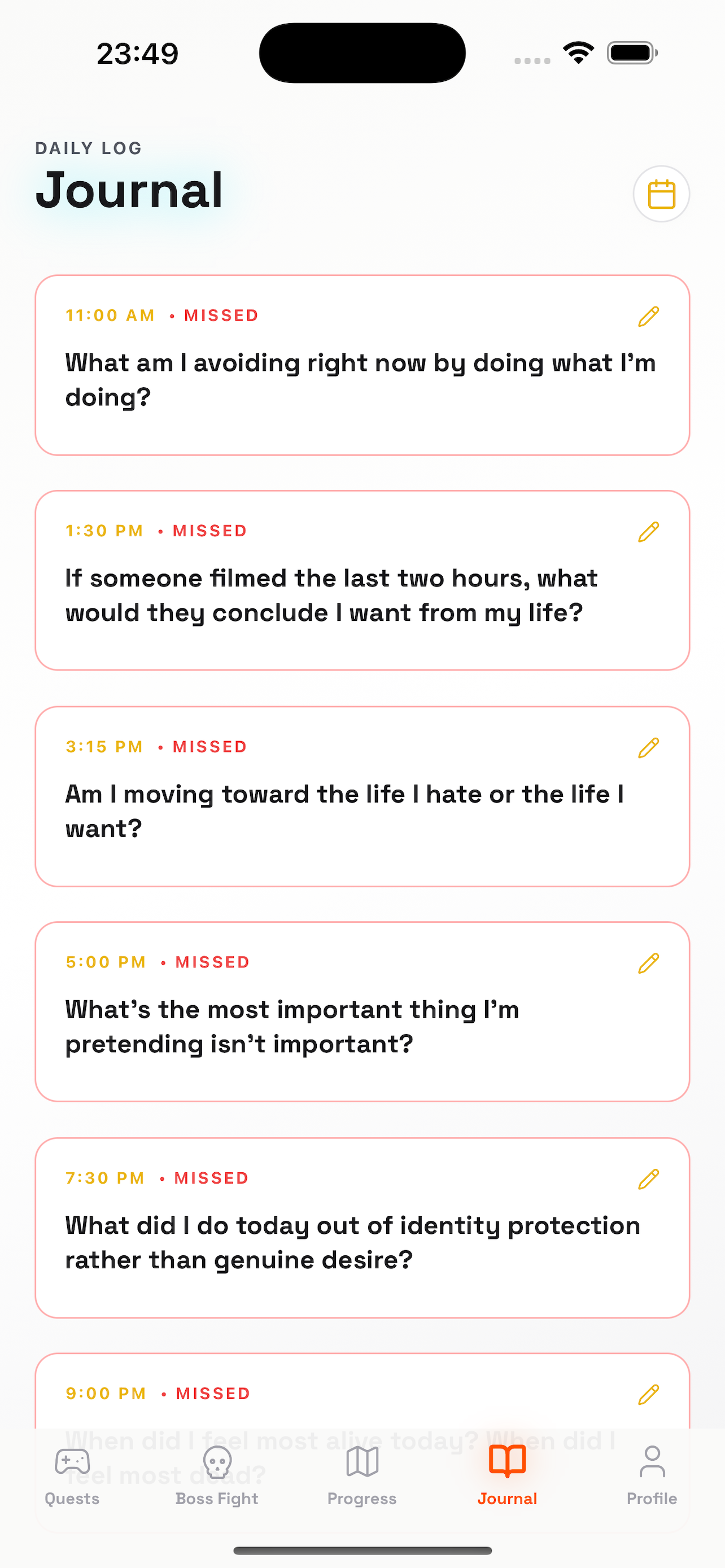
Inside the product
AntiVision
Follow the references
Sources & inspiration
Dream Actions
Devpost project by Rasheeda Robinson
Goals become daily actions.
This independently created project is credited as inspiration. The workflow and implementation guidance in this article are RDC’s analysis.
Put the guide to work
Start with your workflow.
Tell us what your team needs to do, which systems are involved and where the current process slows down.