Mobile appsDecision guide
Scope the first release of a business mobile app
A useful first mobile release lets a defined audience complete one important task from beginning to end. We turn the feature list into that journey, identify the services it depends on and make the acceptance conditions visible before development expands. The result is a scope a founder or business owner can discuss, price and test on real devices.
Choose one audience and a complete task
An app for field technicians and an app for customers may share data while needing different first releases. Choose whose problem the first version resolves and define the starting situation. Follow the user through setup, the useful action and the resulting confirmation. A collection of polished screens is incomplete if the person cannot finish the reason they installed it.
Write the first journey as a sequence a user can recognize: arrive with a need, provide the necessary input, complete the action and understand the result. Name the point at which value appears. If onboarding consumes several screens before that point, challenge each requested field. A business app may need authentication immediately; another product may let people understand the experience first. That choice should follow the task and its data requirements.
Connect screen decisions to backend needs
For every visible action, identify where data comes from and where the result is saved. Authentication, notifications and payment or business-system integrations belong in the scope when the journey depends on them. We compare native and shared-code approaches against device features, team maintenance and supported platforms rather than choosing a framework from the feature list alone.
Create a dependency map beside the screen flow. A booking confirmation may require availability, identity and an external service response; a captured report may require local storage before an upload. Identify which dependencies already exist and which the project must build. The app estimate should include API changes and administrative tools where they are necessary to operate the journey. Otherwise the first release can be visually complete but impossible for the business to maintain.
Include the interrupted journey
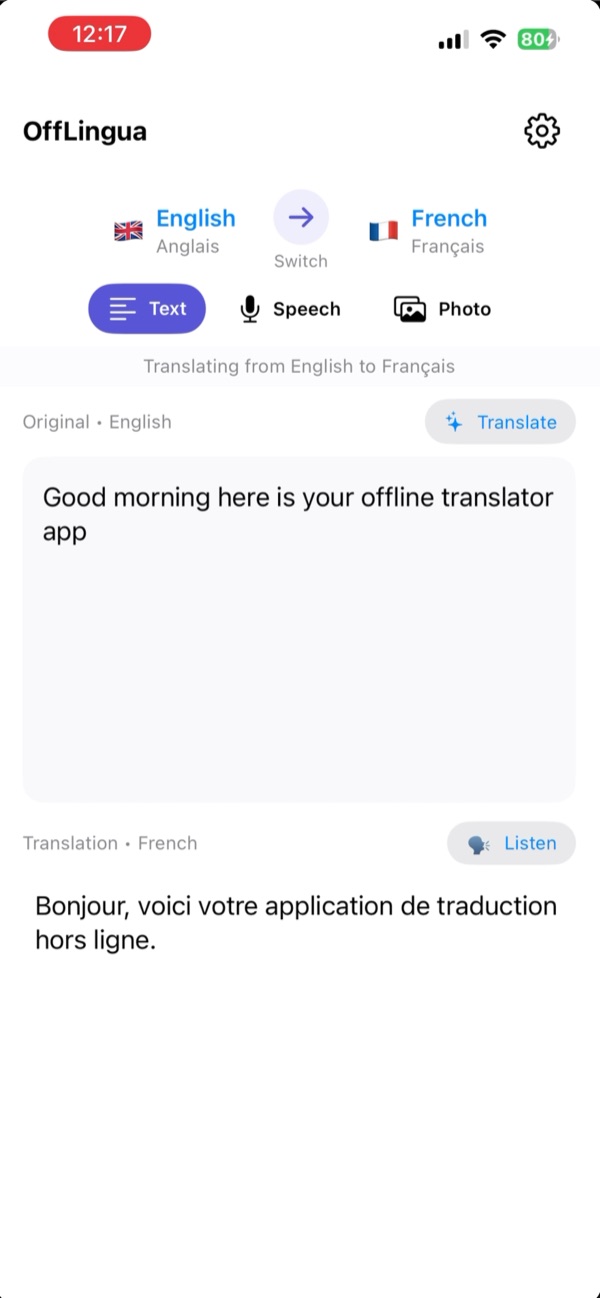
A user may deny a permission, leave during setup or return after a session expires. Define the saved state and the next useful action in each case. We use the team's own products as concrete design context: OffLingua for device readiness, re:plyte for connected identity and AntiVision for recurring activity. Your product still needs its own decisions.
List interruption points on the flow rather than adding a generic error screen at the end. Test leaving during registration, denying a camera request and returning after an external action succeeded. Decide what the app preserves and what it asks again. Use plain states such as saved, awaiting confirmation and requiring a correction. The user should be able to continue without guessing whether repeating an action will create another record.
Plan accounts and personal data together
Decide whether the first task requires an account and what information it truly needs. Review analytics, crash tools and notification providers alongside the app backend. For Romanian and EU users, the data map should support clear explanations and appropriate controls. Adding a privacy page at the end cannot substitute for choosing what the product collects.
The account decision affects support, recovery and data ownership. If the app can function without an account, explain what happens when the phone is replaced. If it requires sign-in, scope forgotten access and removal of an organization member. Review every SDK against its actual purpose in the first release. Keeping an unused analytics or advertising component because it arrived with a starter project can add data handling that the product never intended.
Accept the journey on supported devices
Define a device and operating-system matrix that reflects the intended audience. Test installation, first use, the central task and recovery with accessibility settings and realistic connectivity. Measure task completion and support friction rather than screen count. An early clickable prototype can answer navigation questions, while device testing resolves camera, speech, storage and performance constraints.
Build an acceptance matrix around the journey, not a list of screens opened. Include first installation, repeat use, a permission refusal and an interrupted submission. Test the smallest supported screen and relevant accessibility settings. Ask someone outside the development team to complete the task using only the interface. Record where they stop or misinterpret a state. These observations give a more useful release decision than counting how many planned screens have been implemented.
- Name the moment the user receives value and challenge setup fields that do not affect that first task.
- Map each screen action to the service, saved state and confirmation required behind the interface.
- Test refusal, interruption and returning use alongside the main path before considering the journey complete.
- Include release accounts, operating access and maintenance ownership in the first implementation discussion.
Turn discovery into a buildable release
Bring your audience, core task, existing services and commercial priorities. We can deliver user flows, interaction design, implementation, device testing and store preparation as a connected project. The quote should distinguish essential launch work from later ideas and identify dependencies on account owners, API providers and content. Maintenance ownership belongs in that conversation too.
A first-release proposal can separate discovery, interaction prototype, implementation and release preparation while keeping one coherent outcome. We can identify optional features that do not block the initial journey and show their dependencies. Ask for the source code, service configuration and operating responsibilities to be included in handover. The resulting plan should make it possible to discuss a smaller release without accidentally removing the support or recovery behavior that makes it usable.
Inside the product
Mobile apps
Follow the references
Sources & inspiration
OffTongue
Devpost project by Shivansh Chauhan, Tanishq Maheshwari
On-device speech translation.
This independently created project is credited as inspiration. The workflow and implementation guidance in this article are RDC’s analysis.
Put the guide to work
Start with your workflow.
Tell us what your team needs to do, which systems are involved and where the current process slows down.