InventoryHow-to guide
Keep two sales channels from promising the same stock
Two sales channels can promise the same item even when both screens show a positive stock figure. The problem is usually the timing and meaning of the promise, not the appearance of the dashboard. A stock reservation workflow gives the business a deliberate point at which quantity becomes committed and a visible way to release, fulfil or investigate that commitment.
Define the quantities each channel is allowed to show
Separate physically held stock from stock that can be promised. Some goods may be reserved, awaiting inspection, damaged or held for another purpose. Decide which categories contribute to available quantity and which must remain excluded. Keep the definitions accessible to sales and warehouse staff so a disagreement can be traced to a rule rather than resolved by manually changing a number.
Use the same unit of measure across the promise calculation. A channel selling packs cannot safely compare its requests with a stock feed expressed in individual items unless the conversion is explicit. Product variants and locations matter too. Ten blue items in one depot do not satisfy a promise for ten red items collected from another depot simply because the catalogue description is similar.
Choose one authority for accepting reservations
Consider an illustrative sequence with one item available. A website and a salesperson both read that quantity before either order finishes. If each accepts its order independently, the business has made two promises. The reservation decision must therefore occur at a shared authority that can accept one request and return a meaningful result to the other.
The authority may be the inventory system or another agreed component, depending on the architecture. What matters is that channels cannot bypass its decision while still presenting the same stock as guaranteed. Keep a reservation identifier, requested quantity, order reference and current state. The channel should know whether it has an accepted reservation, a declined request or an uncertain result that needs checking before the customer receives a promise.
Set the reservation lifetime around the buying process
A shopping basket, an approved quotation and a paid order represent different levels of commitment. Decide which events reserve stock and how long each kind of reservation can remain active. Holding every browsing basket indefinitely can hide stock from genuine buyers; releasing a confirmed order too early can create a fulfilment problem.
Make the expiry and extension rules visible to the people operating the process. A salesperson may need to request an extension for a buyer awaiting approval, while the warehouse needs to know which commitments are ready for picking. Avoid a background cleanup that removes reservations without explaining the effect on the associated orders. A useful state model includes a reason for release and a link to the event that caused it.
- Identify the channel and order behind every reservation.
- Record the quantity, unit, item variant and fulfilment location.
- Show whether the commitment is tentative or confirmed.
- Define expiry, extension and cancellation authority explicitly.
- Keep fulfilment and release connected to the original reservation.
Recover uncertain requests without making another promise
A channel may lose its connection after the reservation was accepted but before it received the answer. Repeating the operation as a new request risks holding the same stock twice. Use a stable request reference so the receiving system can return the earlier result, or provide a way to look up that result before attempting another reservation.
A delayed stock feed should also have a visible meaning. If the website cannot confirm a reservation, choose a deliberate customer-facing path such as a request for availability rather than silently presenting stale quantity as a firm commitment. Test channel outages and reconnection with the actual integration. The warehouse and sales team need an exception view showing unresolved orders, their last known reservation state and the person responsible for the next check.
Keep physical movements and promises connected
A reservation does not prove that goods were picked or dispatched. When fulfilment happens, connect the resulting movement to the reservation and update both records through an agreed sequence. Partial picking should leave the remaining commitment clear. Cancellation after partial dispatch also needs a different treatment from cancellation before any goods moved.
When a physical count reveals less stock than expected, do not erase existing reservations to make the quantities balance. Preserve the commitments and route the shortage to a person who can decide which orders need attention. Trace missing movements, incorrect locations and unrecorded returns as possible causes. This turns an inventory correction into a controlled operational decision instead of an unexplained change that customers discover later.
Pilot with the channels that create the conflict
Start with a limited product group and the two channels most likely to compete for it. Rehearse simultaneous requests, payment delays, cancellation, partial fulfilment and a network interruption after acceptance. Measure oversold commitments, reservations awaiting investigation, expired holds and time spent reconciling channel differences. These are operating measures, not a promise of a particular commercial improvement.
RDC can build the reservation connection and review screens around the systems your team already uses. Scope EU-hosted or company-managed deployment together with latency needs, monitoring, recovery and administrator access. Check each channel’s API and licence limitations before agreeing the design. Bring a few conflicting orders, the current stock definitions and the rules used to promise delivery; they show where a reliable shared decision will make the greatest difference.
Inside the product
Inventory
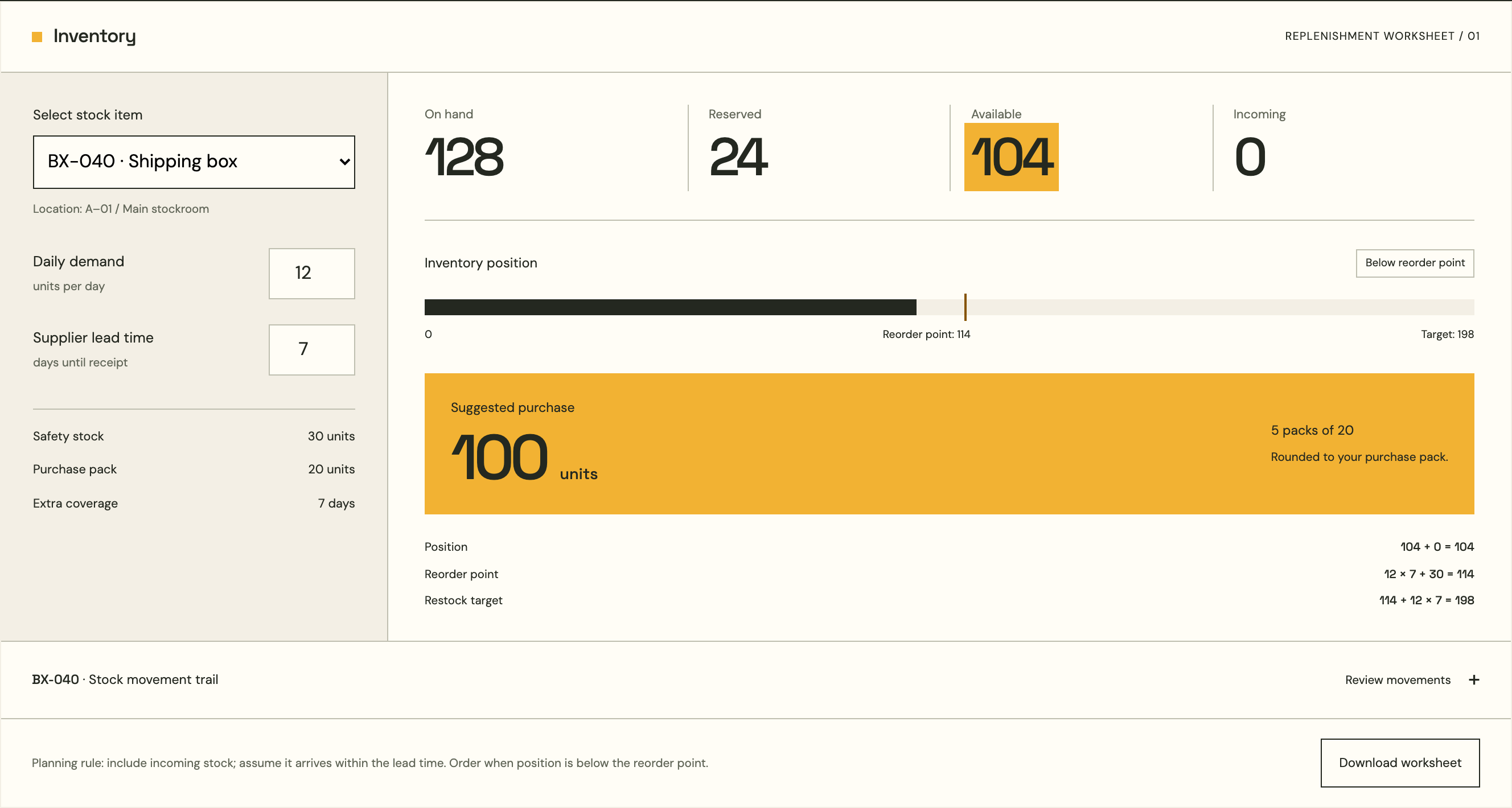
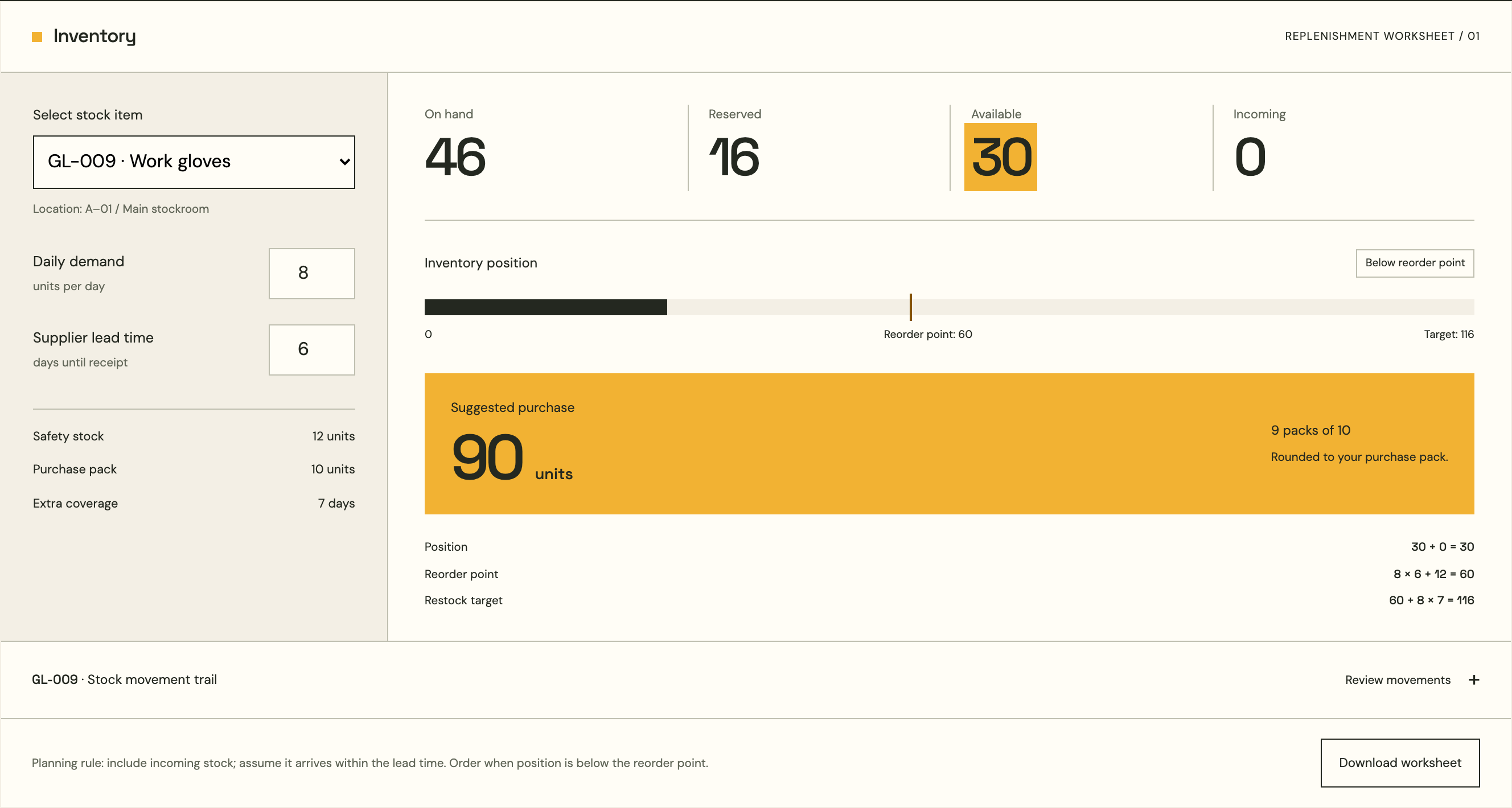
Follow the references
Sources & inspiration
AntWMS
Devpost project by Mohammad Rafaquat Alam
Independent inspiration for workflow design.
This independently created project is credited as inspiration. The workflow and implementation guidance in this article are RDC’s analysis.
Put the guide to work
Start with your workflow.
Tell us what your team needs to do, which systems are involved and where the current process slows down.