IntegrationsDecision guide
Choose the first API integration by the manual work it removes
The first integration should connect a repeated business handoff whose outcome is easy to recognize. Start with the record someone copies, the system that needs it and the person who resolves mistakes. We can turn that small operational boundary into a working connection, then use the observed result to decide which integrations deserve attention next.
Find the handoff that has a clear owner
Walk through a recent transaction with the people doing the copying. Identify waiting, reformatting and missing information rather than treating every spreadsheet as a problem. A useful first candidate has a known source, a stable destination and someone who can confirm completion. Avoid combining several departments' unresolved policy decisions into the first connector.
Rank candidate handoffs using information your team can actually provide: how often the transfer occurs, how long preparation takes, what happens when it is late and how frequently a person corrects it. Keep estimates labeled as estimates until observed. A low-volume transfer with an expensive mistake may deserve attention before a frequent but harmless copy. The ranking should expose these tradeoffs rather than compressing them into an unexplained automation score.
Describe the record before choosing the tool
List the fields, identifiers and events that define the handoff. Decide whether the source sends changes, the destination is polled or a scheduled export is appropriate. A workflow platform, a custom service or a small script can each fit different constraints. Select the implementation after examining volume, permissions and the APIs actually available.
Work through an example source record field by field. Identify identifiers, required values, units, timestamps and reference data. Ask which system owns updates after the first transfer. A customer email change may belong in the CRM, while an order status belongs in the ERP. Decide whether the connection is one-way or needs a separate return path. Bidirectional synchronization should not be assumed merely because both applications expose APIs.
Make failed handoffs visible
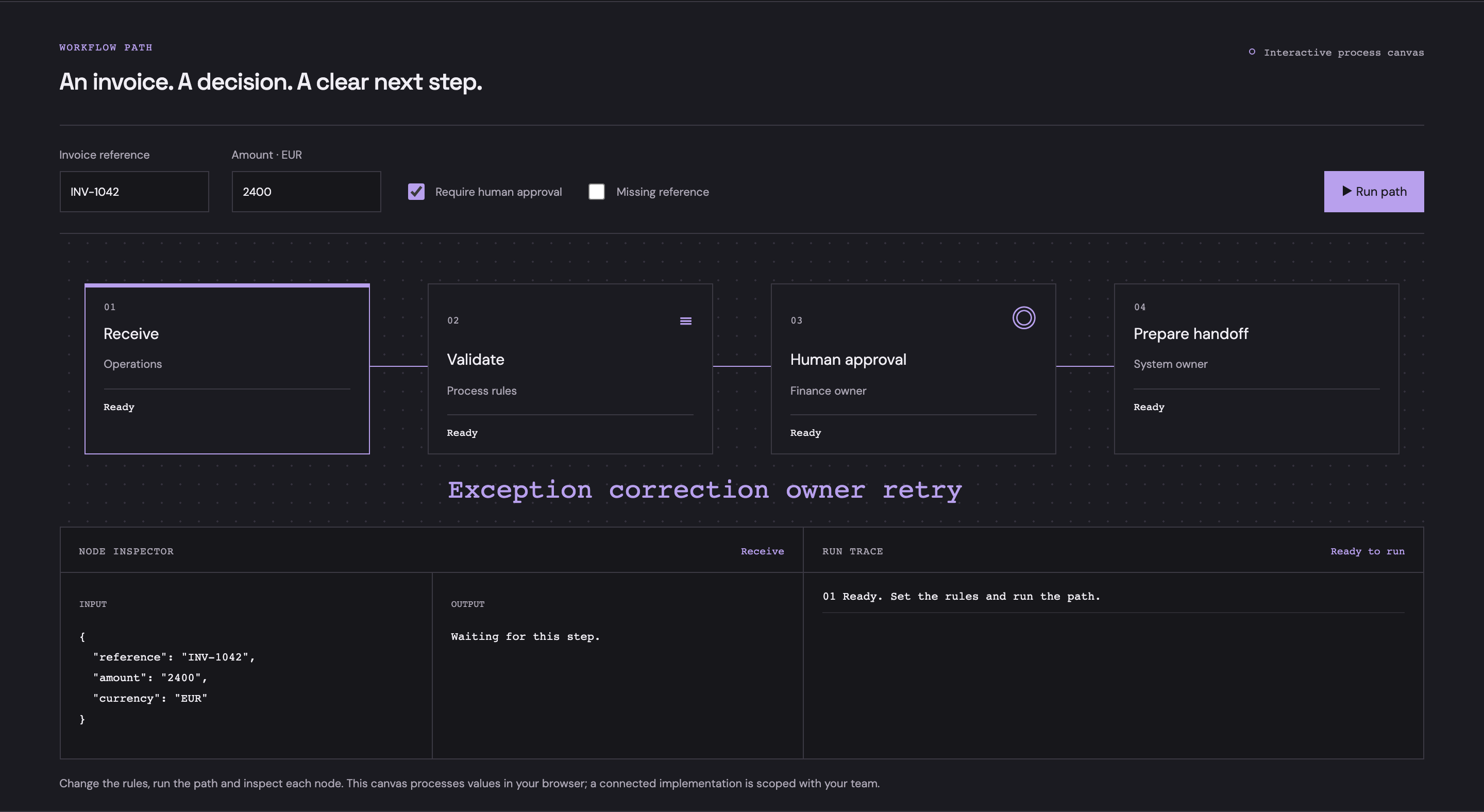
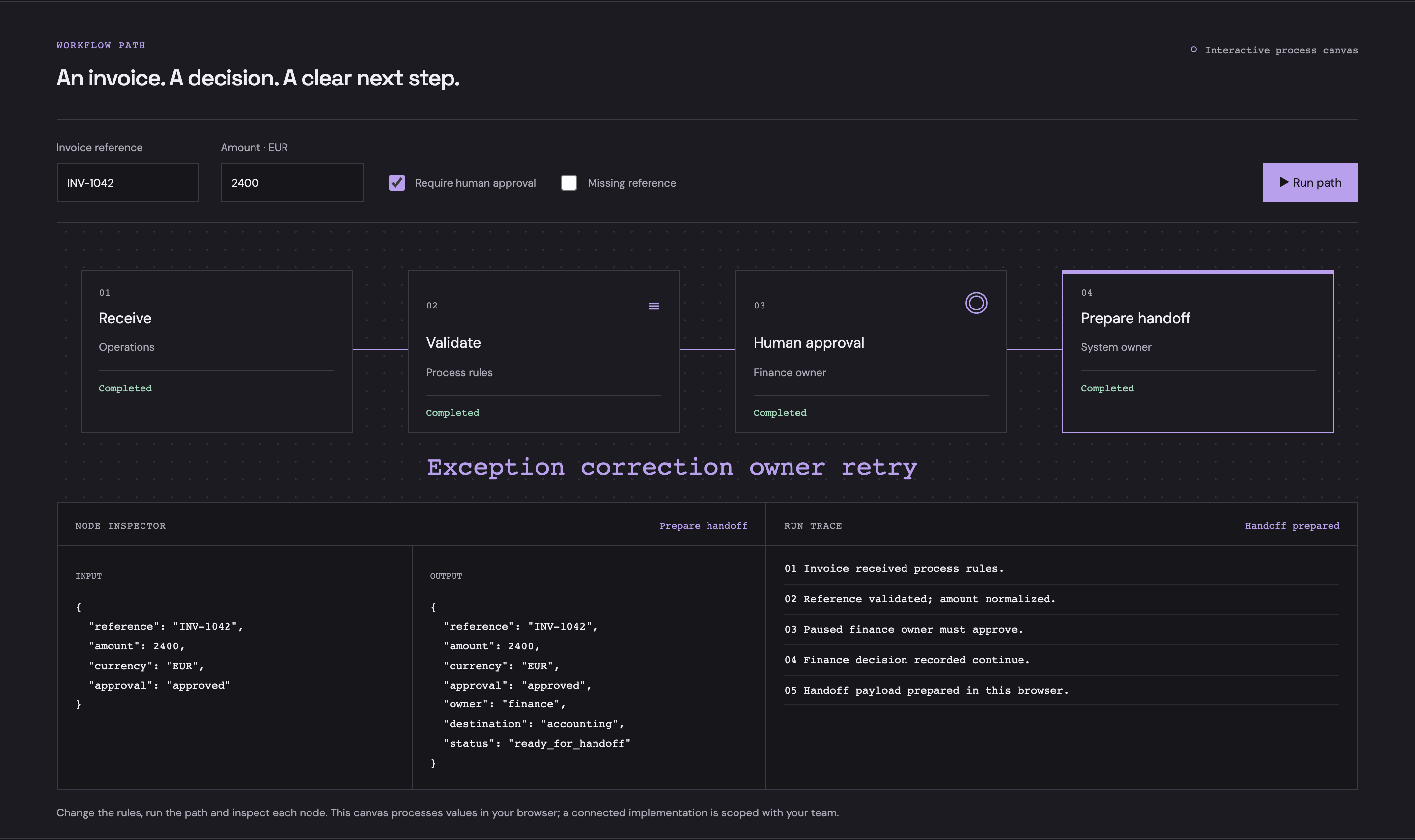
A missing customer identifier should produce a business exception with a clear next action. A temporary network failure can wait for controlled retry. Separate those cases so the operational team does not keep resubmitting data that requires correction. Show the source record and destination state together wherever the owner investigates the problem.
Design the exception list around the questions operations asks. An unknown product code needs the original value and a way to choose the right mapping; a revoked credential needs technical intervention. Keep those cases separate. Decide whether correcting a shared mapping affects only the held record or future imports as well. Record that decision so a seemingly local repair does not silently alter unrelated business data.
Give the connector only its required reach
Integration credentials should belong to an accountable service identity with the permissions required for the specific operation. Review personal data crossing the boundary and remove fields the destination does not need. EU data-handling decisions also include logs, hosting and support access. A connector should not inherit unrestricted administrative access merely because that makes setup convenient.
Review service-account ownership before the first credential is created. Use separate testing and production access where the systems support it, and identify who can rotate credentials. Consider attachments and optional fields independently from the core record. Transferring a whole customer profile may be unnecessary when the destination needs only a stable identifier and delivery address. The data boundary should be explained to the system owners who are approving the connection.
Measure completion and work remaining
Compare the time spent preparing, transferring and resolving records before and after the proposed connection. Track destination acceptance and exceptions by cause. A lower copy-and-paste count is useful only if the destination data remains correct. Test a representative peak period and an interruption so the decision reflects the whole handoff, including recovery.
Observe several real handoffs to establish the current process, including preparation and exception resolution. After implementation, compare the same activities rather than only the time spent copying. Count records that reach the intended destination state and those requiring correction. A pilot period should include ordinary operating variation, such as changed reference data or a busy batch. Use the result to decide whether expanding the connection addresses the next actual source of work.
- Rank transfers by observed preparation, consequences of delay and correction work rather than by frequency alone.
- Name the authoritative system for every field that can change after the first record transfer.
- Separate business-data corrections from credential and network failures in the operator's exception view.
- Verify API access and vendor dependencies before pricing the source-to-destination connection and its operating handover.
Prepare a discovery brief that supports a quote
Bring one recent source record, the expected destination result and access to current API documentation. Name the business owner and the person responsible for each system. We can scope mapping, connection, exception handling and operating handover separately. That makes dependencies visible and gives both sides a concrete definition of the first completed integration.
The first proposal can name one source, one destination, a record type and its completion signal. Include field mapping, access setup, exception behavior and the person accepting the result. Identify dependencies such as API subscription access or vendor approval before estimating delivery. We can use an initial discovery session to resolve these unknowns and produce a scoped connection that remains useful even if the broader systems programme changes later.
Inside the product
Integrations
Follow the references
Sources & inspiration
InvoiceFlow AI
Devpost project by Coolieo Bowley
Invoice approval handoffs.
This independently created project is credited as inspiration. The workflow and implementation guidance in this article are RDC’s analysis.
Put the guide to work
Start with your workflow.
Tell us what your team needs to do, which systems are involved and where the current process slows down.