AccountingWorkflow
A month-end handoff that shows what is still missing
Month-end handoffs become difficult when operations and accounting use the word complete differently. One team means every file was uploaded. Another means documents were checked, missing evidence obtained and open questions resolved. A useful handoff makes those distinctions visible for each period.
Define what ready for finance means
Choose the records that belong in the first workflow: purchase invoices, delivery evidence or employee expense documents, for example. For each category, ask the accountant what makes a record reviewable. A document may need a company, period, business owner and related order. Write these expectations down before building reminders; otherwise automation simply sends more messages about an undefined task.
Build a completeness view from expected work
A folder can show what has arrived, but it cannot explain what should have arrived. Connect expected records to operational events where possible: a received delivery, an approved expense or a recurring supplier relationship. Keep the origin of that expectation visible so finance can challenge an incorrect assumption.
Avoid turning every missing attachment into the same alarm. A delivery that did not occur, a cancelled purchase and a document still being requested require different resolutions. Give the owner a way to mark the reason and attach supporting context. The purpose is a defensible view of outstanding work, rather than a perfect-looking percentage with unexplained exclusions.
Separate collection, review and handover
Use distinct statuses for requested, received, checked and handed over. Assign each transition to the person or event that can establish it. Uploading a PDF should satisfy collection only. Review may still find the wrong period, a missing page or a document belonging to another legal entity.
The handover package should identify its period and version, enumerate included records and list unresolved items. Finance acknowledges receipt of that package rather than relying on a chat message saying everything is ready. If additional documents arrive later, create a supplement linked to the original package. Preserve what accounting actually received at each stage.
Give late items an orderly path
Late documents are predictable enough to deserve a designed process. Record arrival time, claimed business period and current reviewer without assuming how the accountant will treat the item. Let finance decide its handling and document that decision. Moving the file into an older folder does not explain the effect on work already completed.
A reminder should identify the missing item, its operational reference and the person who can help. Escalation can move an overdue collection task to a manager, but it should not give that manager access to all financial documents. Provide a reasoned summary and a route to the responsible specialist. Keep cancelled or disputed requests visible in history.
Design access around the handoff
Purchasing staff may supply delivery evidence, employees may upload their own expenses, and an external accountant may review a company package. These are different access patterns. Limit each participant to the records and actions required for their part of the process, including exported archives and emailed links.
Agree where evidence is retained and who can retrieve an earlier package. Technical logs can record identifiers, actors and outcomes without storing full attachments. If the workflow uses hosted services, include their data handling in the implementation scope. Access reviews should cover external collaborators and shared mailboxes as well as staff accounts.
Measure completeness with its denominator attached
A useful report explains both received items and expected items. Track unresolved requests by category and owner, the time from receipt to review, and the number of packages supplemented after handover. Break down reasons for reopening a record so that a missing page is not confused with a change in accounting treatment.
Test a cancelled order, a late invoice and an attachment assigned to the wrong company. Verify that each changes the report in an understandable way. Microsoft's data-lineage guidance illustrates the value of source and refresh information. In your handoff view, show when the operational inputs were last updated so a stale total does not look final.
Agree the handover manifest
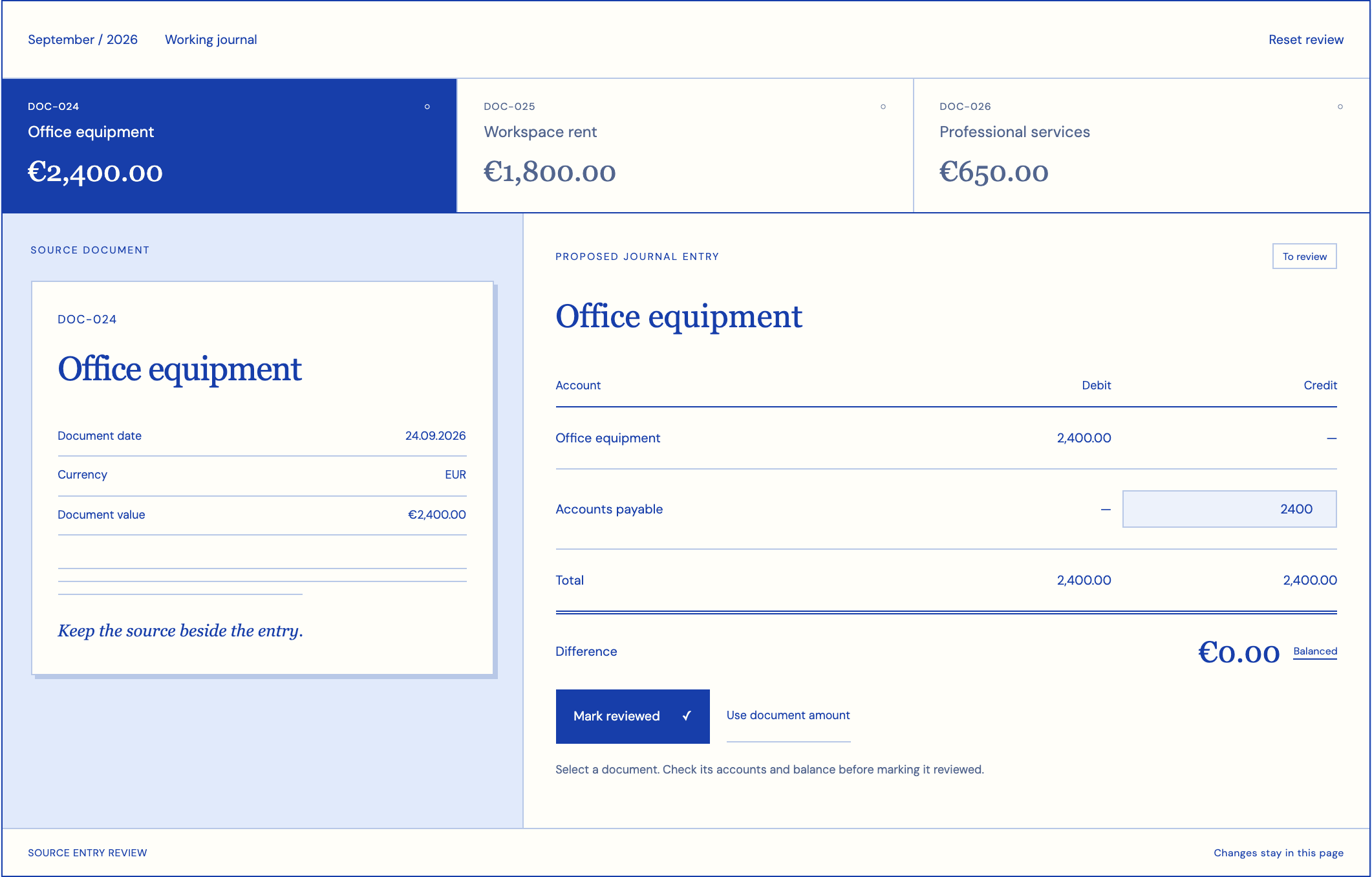
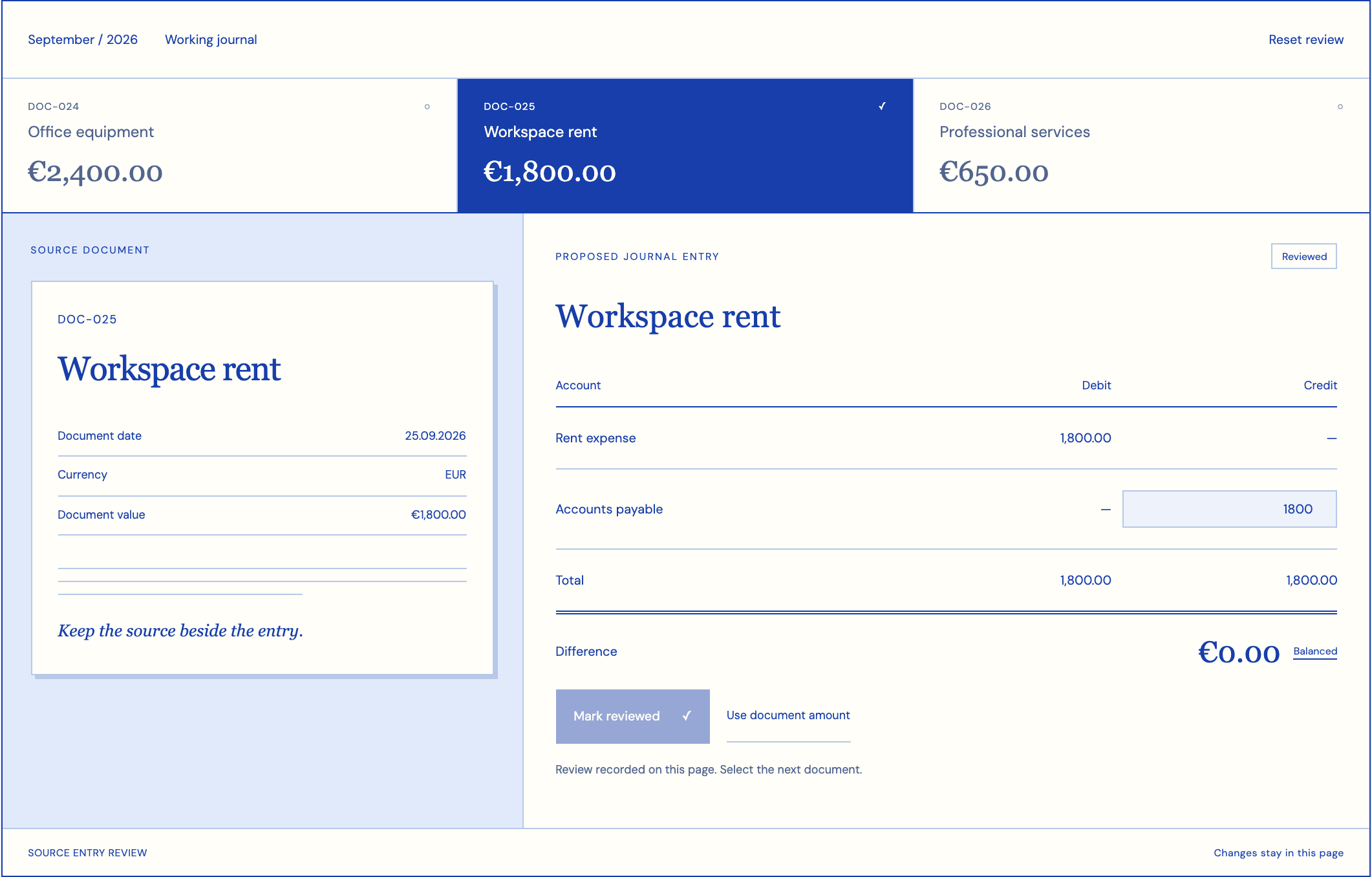
A manifest is the explicit list of what a package contains. Include record identifiers, document categories, period, review status and the version of the package. The receiving accountant can compare that list with what was actually received and identify a missing attachment without reopening the entire collection process.
The manifest should also describe unresolved exclusions. For example, a requested invoice may remain with purchasing because the supplier has not provided it. Naming that item and its owner is more useful than omitting it to produce a clean package. Finance can then decide how the outstanding work affects its process.
Where several departments contribute, agree how a replacement package is distinguished from a supplement. A supplement adds identified records; a replacement changes the agreed set. The recipient needs this distinction before importing attachments or updating a checklist. Test the recipient's experience using the actual transfer channel, including filenames, permissions and the way acknowledgments return to the sender. A package is ready for handover when both sides can identify the same contents and the same remaining questions.
- The receiving accountant can identify the company, period and exact package version without relying on the subject of a forwarded email.
- Every expected but missing document has a reason, responsible person and operational reference that explains why it was expected.
- A supplement identifies its additions, while a replacement explains which earlier package and records it changes.
- The acknowledgment refers to the agreed manifest and exposes any attachment or access problem before the handoff is considered received.
Build a repeatable monthly process
RDC can implement the expected-document list, owner requests, review states and versioned handover for one company and document family. Your finance team defines readiness and the treatment of late or disputed records. We turn those decisions into a workflow the other departments can follow.
For a scoped quote, bring the present checklist, a redacted handover package and the systems holding operational events. We can agree acceptance checks for completeness, permissions and corrections before connecting additional sources. The resulting process should make unfinished work easier to act on and completed handovers easier to reconstruct.
Inside the product
Accounting
Follow the references
Sources & inspiration
InvoiceFlow AI
Devpost project by Coolieo Bowley
Invoice checks and approval routing.
This independently created project is credited as inspiration. The workflow and implementation guidance in this article are RDC’s analysis.
Put the guide to work
Start with your workflow.
Tell us what your team needs to do, which systems are involved and where the current process slows down.